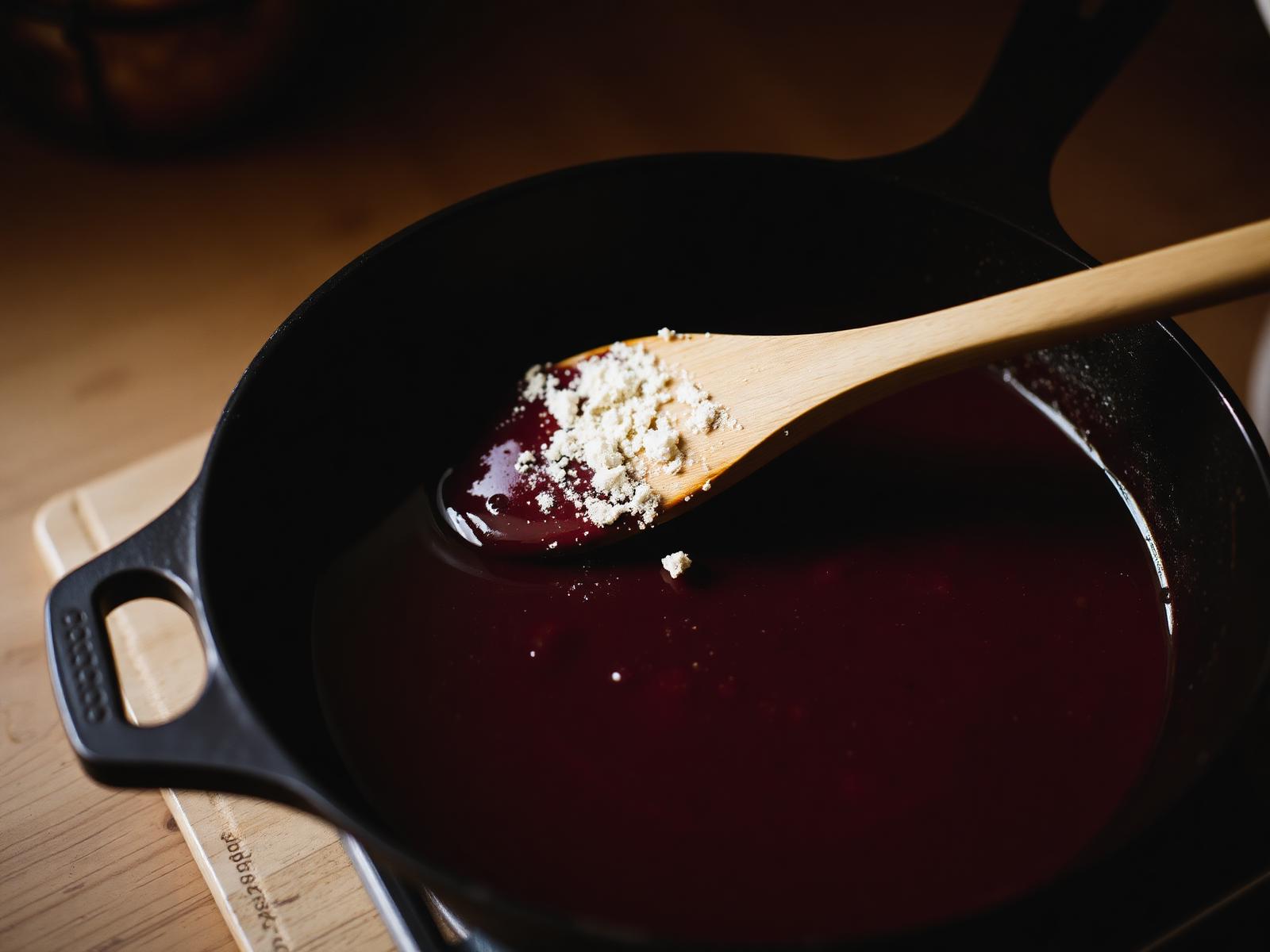
The word roux came through French culinary exchange, and the blond ratio came with it. But Black Louisiana cooks took the roux somewhere French cuisine rarely goes — to the color of mahogany, the color of dark chocolate, the color of a copper penny left in the sun. The dark roux is not a French technique applied in Louisiana. It is a distinct Black American technical innovation, built by cooks who understood that cooking flour and fat past the French stopping point produced something French cuisine had no name for: a flavor base, not a thickener, carrying a depth and a nuttiness that changes the entire character of a dish.
The French gave the word. Black Louisiana cooks built the technique. Made in cast iron because cast iron holds heat the way nothing else does. Stirred without stopping because the moment it burns is the moment it is ruined. Forty-five minutes of full attention is not a flaw of the technique. It is the technique.
Historical context
Jessica B. Harris and Michael W. Twitty have both pushed back on the lazy attribution of roux to French cuisine alone. The classical French blond roux is one cousin in a much larger family. The mahogany dark roux of Louisiana gumbo, built deliberately past the point French cookery considers acceptable, descends more directly from West and Central African fat-and-flour technique, the same lineage that produced the dark groundnut and palm-oil pastes used to thicken and color stews across the rice coast. Black Louisiana cooks, working with the trinity, with smoked pork, with okra, with file from sassafras the Choctaw taught them, built a system the French language could only borrow a single word for. Leah Chase, Austin Leslie, and Lena Richard are the modern record-keepers; the lineage runs much deeper than any restaurant or any century.
Technical definition
A roux is a cooked paste of fat and starch (in the Louisiana tradition almost always wheat flour) used to color, thicken, and flavor a stew or sauce. Mechanically, heat first hydrates the starch in the fat, then breaks the starch granules down through the Maillard reaction and pyrolysis, sacrificing thickening power as it gains color and roasted-grain flavor. A blond roux is mostly thickener; a dark mahogany roux is mostly seasoning. The Black Louisiana dark roux is a deliberate, sustained pyrolysis of flour to the edge of burning, producing a coffee-and-cocoa flavor that French classical cookery, which stops at blond, does not produce and was never trying to produce.
How to execute it
- 01
Heat fat in a heavy cast-iron pot or enamel Dutch oven over medium-low. Neutral oil goes further; bacon fat adds depth; butter burns too easily for a dark roux.
- 02
Whisk in flour all at once. The mixture should look like wet sand.
- 03
Stir constantly with a flat wooden spoon or silicone spatula, edges and bottom, never walking away. This is 30–60 minutes of unbroken attention.
- 04
Watch the color change through stages: blond (white sauce) → peanut butter (gumbo z'herbes, étouffée) → milk chocolate (seafood gumbo) → dark chocolate / mahogany (chicken and sausage gumbo).
- 05
Drop the holy trinity (diced onion, celery, and green bell pepper) directly into the hot roux to stop the cooking and begin the sweat. The vegetables will hiss and cool the roux. This is the correct move.
- 06
Build the gumbo on top of that base: stock, seasoning meat, protein, okra or filé at the appropriate moment.
Ratios, times, temperatures
- Classic roux ratio: equal weights of fat and flour. By volume that's about 1 cup flour to 3/4 cup oil.
- Thickening power: a dark roux thickens less than a blond roux (the starch has broken down). Use about 25–50% more dark roux than you would blond for the same consistency.
- Holy trinity: 2 parts onion, 1 part celery, 1 part green bell pepper by volume.
The three stages, by color
Color is the only reliable test. Time and temperature are guides; the eye is the instrument.
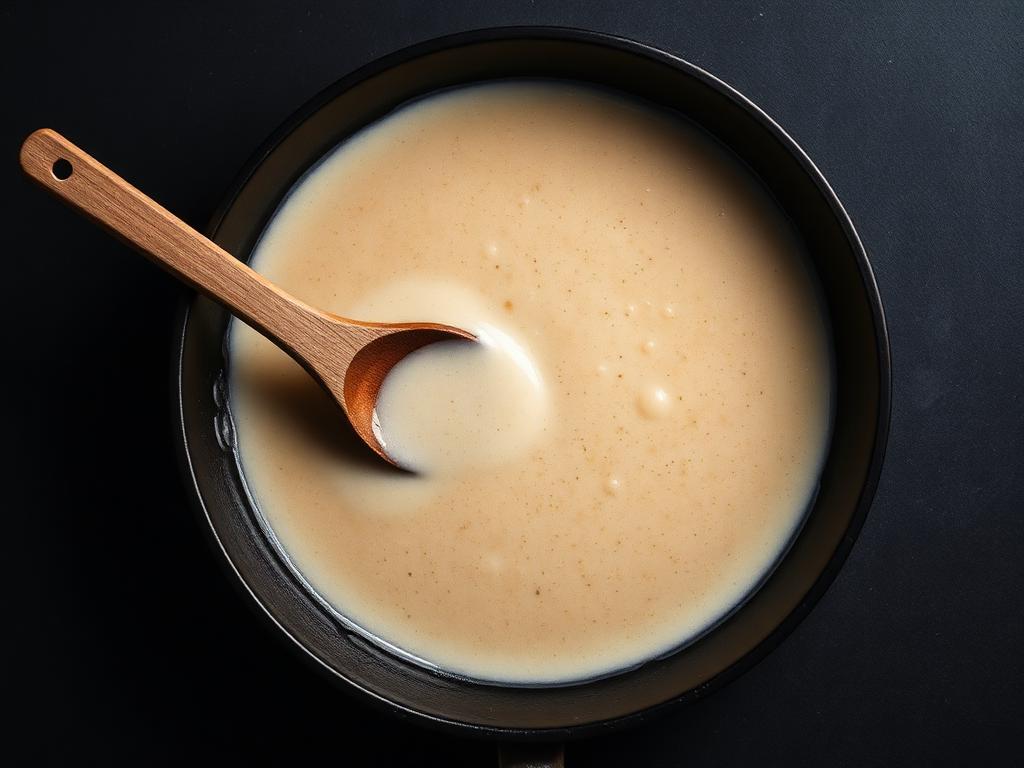
Light (Blond) Roux
Pale gold, the color of wet sand
Cooked 5–10 minutes over medium-low heat until it smells like toasted bread but stays pale. Holds the most thickening power; use this when you want body and a clean, mild flavor that lets dairy and cheese lead.
Use it for
Béchamel, mac and cheese, cream gravies, chicken pot pie, biscuit gravies, light cream soups
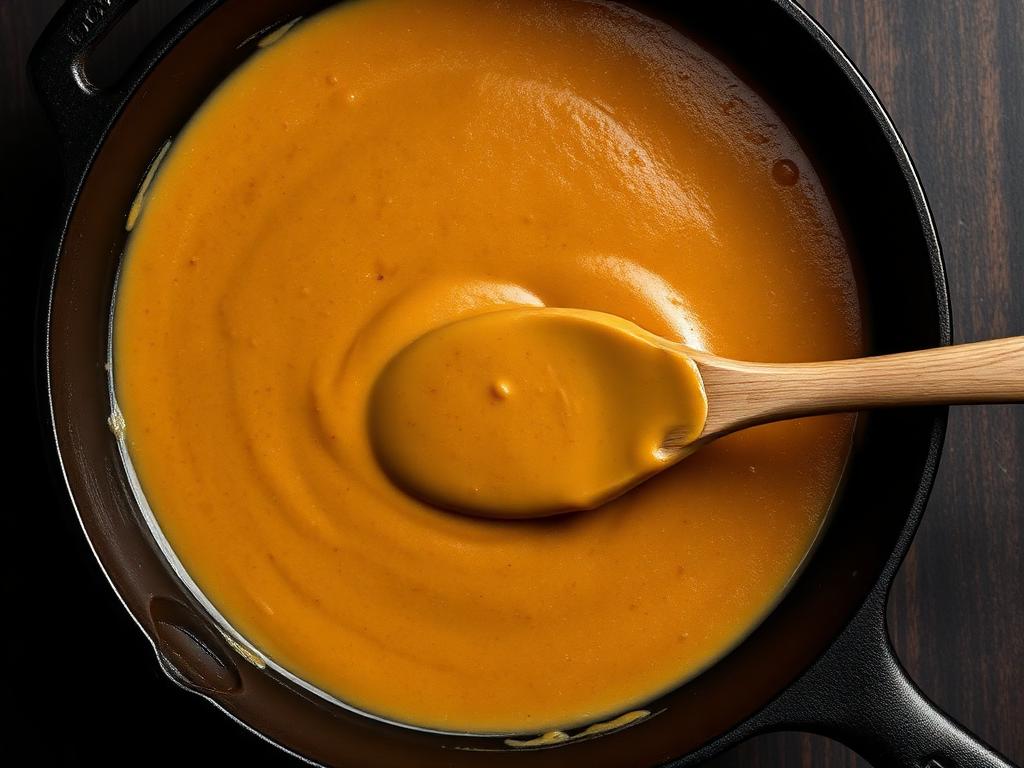
Medium (Peanut-Butter) Roux
The color of peanut butter or light caramel
Cooked 15–25 minutes, stirring steadily. Some thickening lost, real toasted-flour flavor gained. The everyday Louisiana home roux. Pairs well with shrimp and other delicate seafood that would be overwhelmed by a darker base.
Use it for
Étouffée, seafood gumbo, gravy for smothered chicken, jambalaya base, tomato-based stews
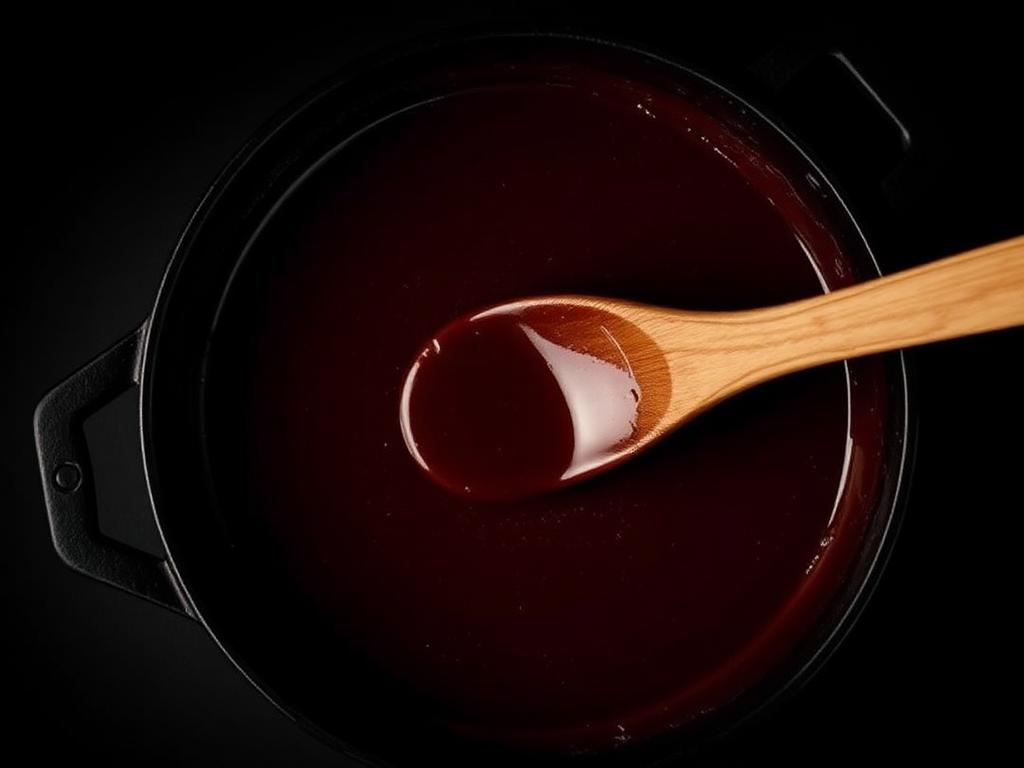
Dark (Mahogany / Chocolate) Roux
Deep mahogany to dark chocolate
Cooked 30–60 minutes (longer for the darkest mahogany), never leaving the pot. Thickens little; flavors a lot. This is the African-inflected Louisiana signature, the version French cuisine deliberately stops short of. Use 25–50% more by volume than you would a blond roux for the same body.
Use it for
Chicken-and-andouille gumbo, duck and game gumbos, dark filé gumbo, anything that needs a flavor that reads almost like coffee or cocoa
Variations
- Oven roux: flour on a sheet pan at 350°F (177°C), stirred every 10 minutes, 45–90 min. Hands-off, very even, favored by many working Creole kitchens.
- Dry roux: flour toasted in a dry skillet to tan, then whisked into liquid. Lower fat, still flavorful.
- Bacon-fat roux: deeper, smokier; excellent for chicken-and-andouille gumbo.
- Cornmeal roux: a grainy, toasted variant, not classical, but a real expansion with Southern roots.
- Benne-seed roux: toasted benne (sesame) ground into the roux for a Gullah Geechee expansion.
Common failure points
- ✕Leaving the pot. A dark roux goes from mahogany to burnt in 30 seconds. If the phone rings, take the pot off the heat.
- ✕Too high heat. You can push the heat as you get more practiced, but medium-low is safer and only costs time.
- ✕Dropping cold trinity into a cold roux. The hiss when the vegetables hit is doing work. It stops the cooking and starts the sweat in one move.
- ✕Over-thickening. A dark gumbo is pourable, not gluey. If it's a gravy, it has gone too far.
Canonical expressions
Chicken and andouille gumbo (dark mahogany roux)
The signature gumbo of Black home Louisiana cooking: a forty-five-minute dark roux, the trinity, smoked andouille, dark-meat chicken, served over Carolina-style rice.
Seafood gumbo (peanut-butter roux + okra)
Lighter roux to let shrimp, crab, and oysters lead, with okra as the secondary thickener. The Gulf Coast version.
Gumbo z'herbes (Leah Chase tradition)
Lenten green gumbo of seven (or more, always odd) different greens cooked down for hours with a medium roux. The Dooky Chase recipe is the canonical modern reference.
Étouffée (peanut-butter roux)
Crawfish or shrimp smothered in a roux-based gravy, the trinity, and stock, served over rice. The dish that lives between gumbo and smothering.
Smothered chicken gravy (in-pan roux)
The miniature roux made in the dredging-flour residue of the smothered chicken pan: same technique, scaled down and built directly under the protein.
Recipes from Black cooks & writers
- Leah Chase: Gumbo Z'herbes (Dooky Chase tradition)
Restaurant site; the recipe lives in The Dooky Chase Cookbook.
- Toya Boudy: New Orleans Gumbo (Cooking for the Culture)
- Isaac Toups: Cajun Gumbo tutorial (video)
- Jocelyn Delk Adams: Grandbaby Cakes on gravy-style roux
What else can this be?
Extensions
What happens when you make a roux with bacon fat instead of butter? With smoked neutral oil? With cornmeal flour for a grainy, toasted version? What does a roux built on browned benne seeds taste like? The canon is not finished.
- →Build a bacon-fat dark roux for a gumbo that doubles down on smoke; use it for chicken-and-andouille and for a duck-and-tasso variant.
- →Toast benne (sesame) seeds whole, grind coarse, and stir into a peanut-butter-stage roux for a Gullah Geechee roux that brings West African seed flavor into the Louisiana technique.
- →Use a cornmeal-and-flour blend (3:1) for a grainy, more deeply toasted roux under a chicken-and-okra stew — closer to a Senegambian thickener than a French one.
- →Make a smoked-oil roux: cold-smoke neutral oil for two hours before whisking in flour. The smoke is locked into the fat, then the fat carries it into every spoonful of gumbo.
- →Build a dark-roux mole hybrid: finish a mahogany roux with toasted dried chiles and a square of unsweetened chocolate, served over braised oxtail.
Further reading
- The Dooky Chase Cookbook, by Leah Chase (Library)
- The Cooking Gene, by Michael W. Twitty (Library)
- High on the Hog, by Jessica B. Harris (Library)
- The Dooky Chase Cookbook, by Leah Chase
- The Welcome Table, by Jessica B. Harris
- The Cooking Gene, by Michael W. Twitty
- High on the Hog, by Jessica B. Harris
- Mosquito Supper Club, by Melissa M. Martin