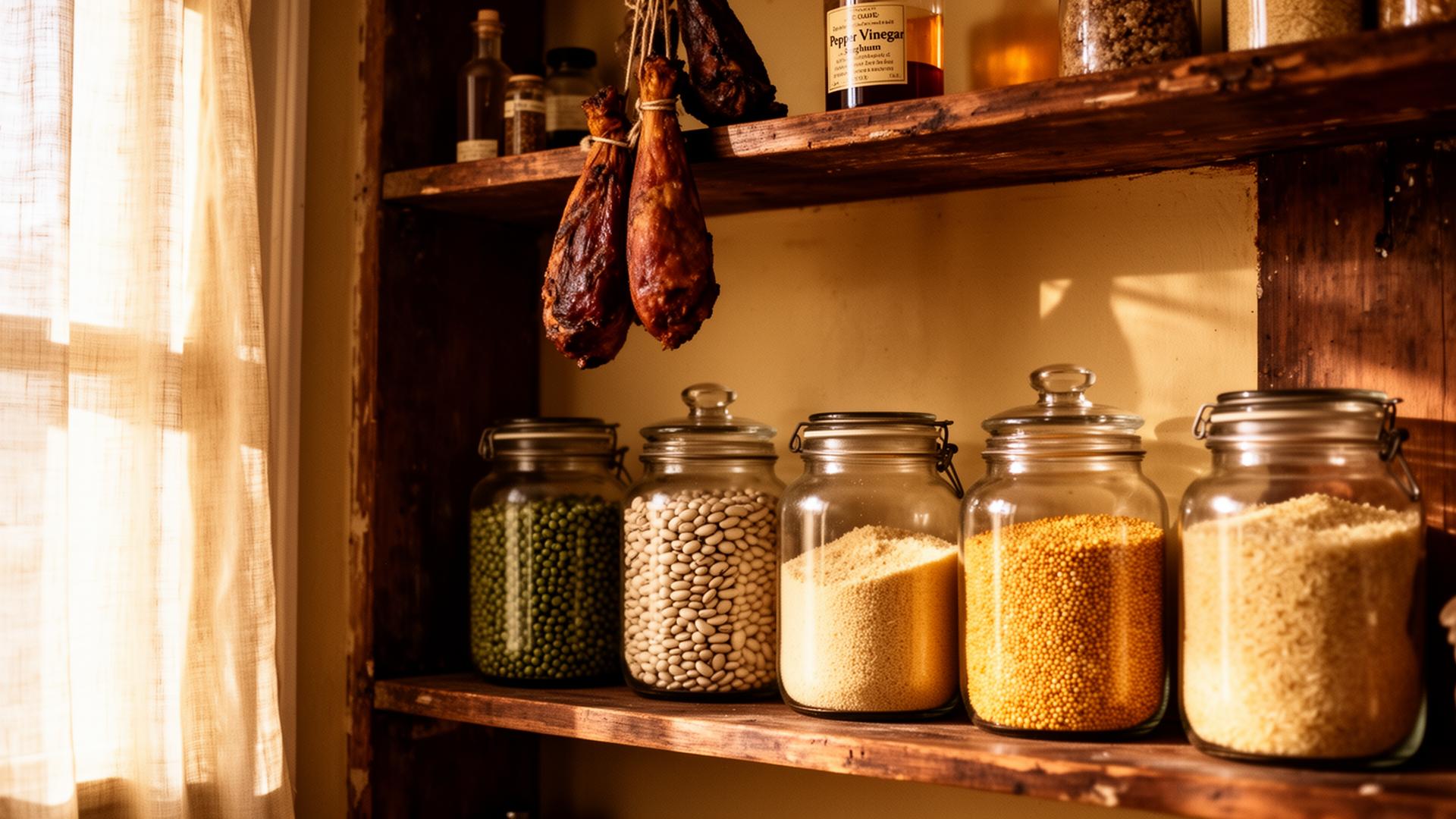
Section 7 · The Pantry
The Pantry
What lives on the shelf, in the jar, on the back of the stove. The materials of the cuisine, named.
A pantry is a kind of memory. What you keep on hand is what you've decided your kitchen is for. What follows is a catalog of the ingredients, seasonings, and tools that build Black American cooking, not as a shopping list but as a working library.
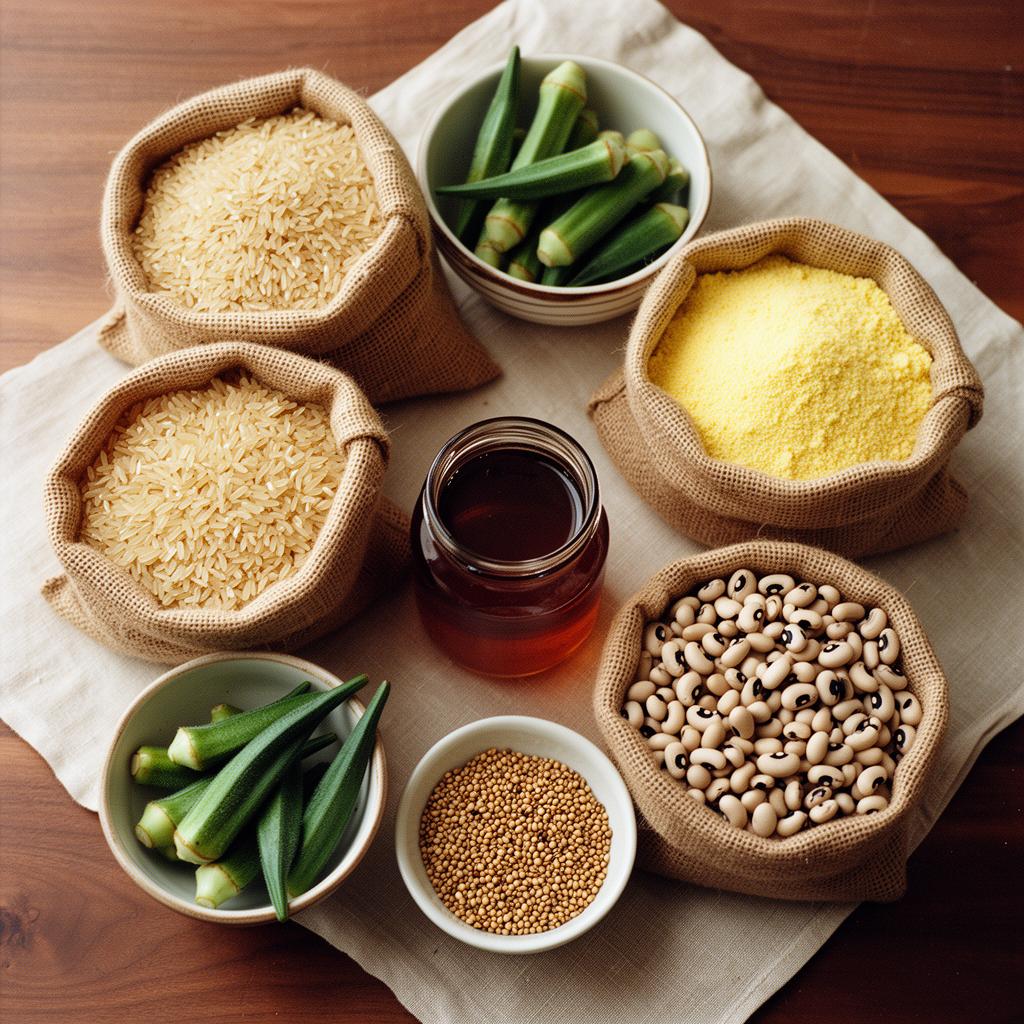
The carbohydrate spine
Grains, Rice & Legumes
These are the bones of the plate. Buy them carefully and store them well, a good pot of beans starts the day you bring them home.
Carolina Gold rice
also: long-grain heirloom
The historic African rice of the Lowcountry. Nutty, slightly chewy, the right grain for red rice and Hoppin' John.
Long-grain white rice
The everyday workhorse. Rinse it. Cook it by absorption, not in a pasta bath.
Stone-ground yellow cornmeal
Coarse and gritty. Non-negotiable for real cornbread. Anson Mills if you can; any local stone mill if you can't.
Stone-ground white cornmeal
The Lowcountry / Appalachian preference. Sweeter, softer crumb.
Stone-ground grits
Not instant. Not 'quick.' Stone-ground grits take 45–75 minutes and are a different food entirely.
Hominy
Nixtamalized corn. Indigenous technology that became a Southern pantry staple.
Black-eyed peas
also: cowpeas
Came across the Atlantic from West Africa. New Year's Day, every year, for luck and for the record.
Field peas
also: crowder, purple hull, lady, pink-eye
The summer Southern bean. Cook fresh or frozen with a smoked turkey wing.
Red kidney beans
The Monday bean of New Orleans. Camellia brand if you can find it.
Pinto beans
The slow-cooked weekday bean. Soak overnight; never boil hard.
Butter beans
also: large limas
Sunday beans. Slow-cooked until creamy, ham hock in the pot.
Sorghum syrup
The historic Southern sweetener, molasses-adjacent, less bitter, deeply Southern. Glaze sweet potatoes with it.
Peanuts
West African in origin, carried across the Atlantic and cultivated across the American South. Used in peanut soup, boiled peanuts, peanut brittle, and as a cooking fat in some West African–rooted preparations. George Washington Carver's primary research subject and the ingredient most associated with the framework's foundational question: what else can this be?
Masa & hominy grits
Distinct from stone-ground grits, made from nixtamalized corn using Indigenous technology, and carrying a different flavor and texture entirely.
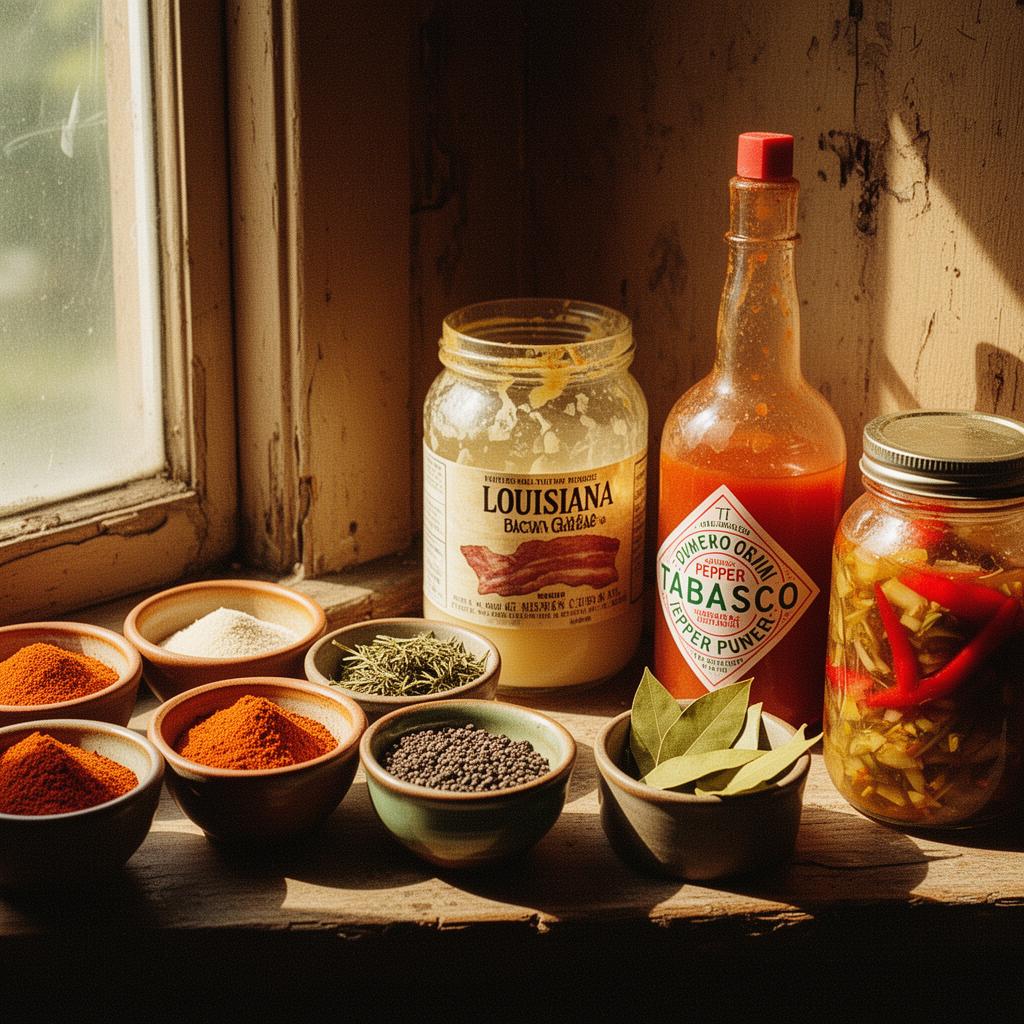
The seasoning library
Spices, Heat & Vinegars
Most of these belong on a small open shelf, not buried in the back of a cabinet. If you can't see them, you won't reach for them.
Kosher salt
Diamond Crystal for cooking, the lighter flake makes seasoning by feel possible.
Black pepper (whole)
Grind fresh. Pre-ground pepper goes flat in a month.
Cayenne
The heat in a Louisiana pot of red beans, in a fried chicken dredge, in a pan of greens.
Smoked paprika
A modern addition to the pantry, useful for plant-forward cooks approximating smoked-meat depth.
Sweet paprika
For color and a quiet sweet warmth in dredges and rubs.
Garlic powder & onion powder
Workhorses of the seasoning blend. Buy them fresh and replace yearly.
Dried thyme
The herb that lives in everything from gumbo to braised greens. Buy whole leaves, not powder.
Bay leaf
One in every pot of beans, every braise, every long-cooked anything.
Filé powder
Ground sassafras leaves. Stirred into gumbo off the heat, never boiled, or it ropes.
Allspice
The Caribbean signature. A few berries in a jerk rub, a brine, a pot of oxtails.
Pepper vinegar
Small bottle of distilled vinegar packed with hot peppers. Lives at the table for finishing greens.
Apple cider vinegar
Brighter, fruitier finishing acid for slaws, beans, and braising liquid.
Hot sauce (Louisiana-style)
Crystal, Tabasco, Louisiana brand, vinegar-and-pepper, cuts richness, lives at the table.
Chow-chow
Pickled cabbage relish. Spooned over beans, peas, and braised meat.
Cane vinegar
The Louisiana-specific vinegar made from sugarcane juice, distinct from apple cider and white vinegar, with a slightly sweet and mellow acidity used in dressings, brines, and finishing.
Cane syrup & ribbon cane syrup
The Louisiana sweetener made from fresh sugarcane juice, darker and more complex than corn syrup, used in pecan pie, sweet potato dishes, and as a table syrup.
Molasses
The byproduct of sugar refining, the plantation-era sweetener that built gingerbread, baked beans, and dark breads — the ingredient that most directly carries the history of the sugar trade in its flavor.
Dried chiles (cayenne, chile de árbol)
Distinct from cayenne powder, these whole dried chiles carry a deeper, earthier heat used in long-braised preparations and pickles.
Creole mustard
The whole-grain, sharp Louisiana mustard distinct from yellow mustard, essential to Creole dressings, brines, and sauces.
Benne seeds
Sesame seeds brought to the Lowcountry from West Africa. Used in benne wafers, Gullah cooking, and modern Black Southern pastry. (See: Glossary — Benne.)
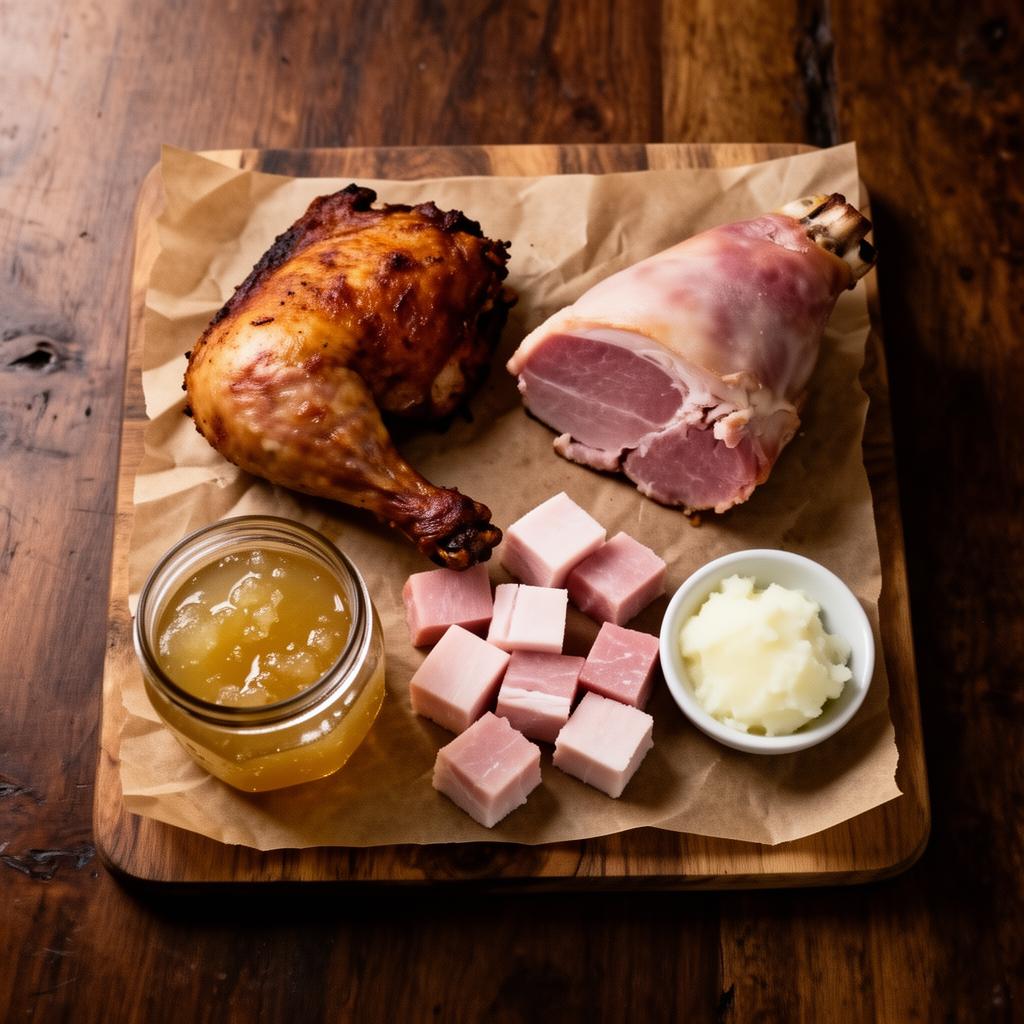
The flavor inheritance
Fats & Seasoning Meats
In this tradition, fat is an ingredient, often the most important one in the pot. The smoked seasoning meat is what makes water into pot likker.
Bacon grease
The jar on the back of the stove. Strain after every use; refrigerate. Lasts months.
Lard
Rendered pork fat. Make biscuits with it. Fry chicken in it. Higher smoke point than butter.
Smoked turkey wings
The modern, leaner replacement for ham hock. Goes in every pot of greens or beans.
Smoked turkey necks
Cheaper, equally flavorful. Pull the meat off after braising and add it back.
Smoked ham hock
The classic seasoning meat. One per pot of beans or greens.
Salt pork
Cured, unsmoked pork fat. Cubed, rendered, and used as the starting fat for greens.
Andouille sausage
Louisiana smoked pork sausage, the soul of a chicken-and-andouille gumbo.
Hot smoked sausage
Cut into coins for red beans, gumbo, or jambalaya.
Beef tallow
Increasingly common in the modern Southern kitchen. Excellent for searing.
Smoked olive oil / smoked coconut oil
Plant-forward analogs. Bryant Terry's pantry uses them well.
Dried shrimp
A Lowcountry and Louisiana pantry staple used as a seasoning ingredient the way smoked meat is used in other regions, adding a concentrated umami and brininess to rice dishes, stews, and greens.
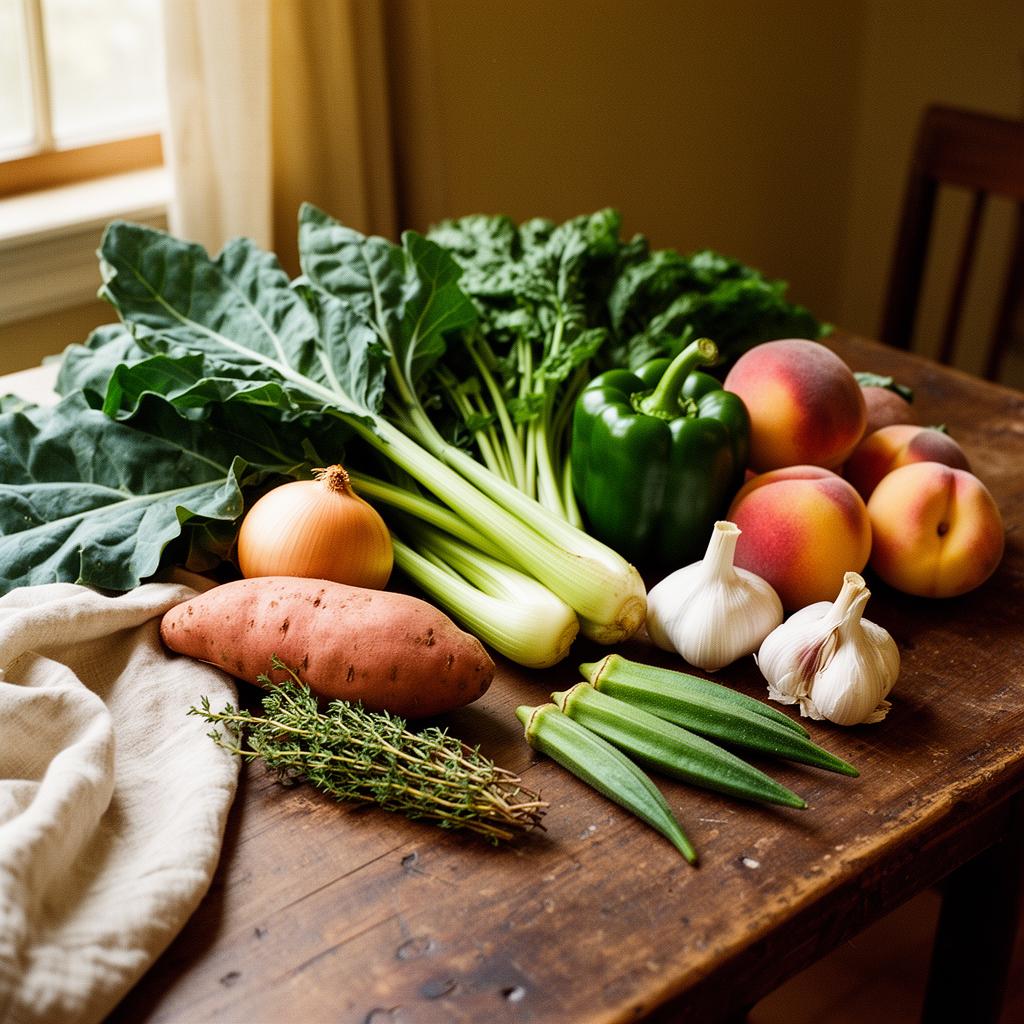
The garden's contribution
Produce & Fresh Aromatics
Most of these belong in a bowl on the counter or a basket by the door. The Southern kitchen is a kitchen of fresh things, even when it cooks them long.
Yellow onion
The base of almost everything. A pound of onion makes a pound of meat go further than any other move in this kitchen.
Green bell pepper
One third of the holy trinity. Use it where Louisiana-leaning dishes call for it.
Celery
The other third of the trinity. Worth keeping a head in the fridge at all times.
Garlic
Fresh heads, never pre-minced jar garlic. The flavor difference is the whole game.
Fresh thyme
A bundle in every pot of beans, every braise. Strip the leaves; throw the stems into the pot whole.
Flat-leaf parsley
Fresh, chopped at the end. Brightens braises, fried fish, potato salad, anything that needs a green lift at the table.
Green onions
Whites cooked into the base, greens sliced raw at the end. Indispensable across Lowcountry, Creole, and Migration-era Black urban cooking.
Fresh bay laurel
Whole fresh leaves are gentler and brighter than dried — one or two in any long braise carry a different, more floral note than dried bay.
Bay laurel
A live plant on the windowsill is a long-term investment in your cooking.
Collard greens
Buy a big bunch. Wash three times. Strip the central rib if it's tough; chop the leaves into ribbons.
Mustard greens
Sharper than collards. Mix half-and-half with collards for depth.
Turnip greens
A little bitter, often sold with the small turnips attached, cook those too.
Okra
Fresh in summer; frozen the rest of the year. Whole for stew, sliced for thickening, halved for charring.
Sweet potato
Garnet or jewel for pies and casseroles; white-flesh varieties for savory roasting.
Peaches
When in season, eat them over the sink. Out of season, frozen or canned for cobbler.
Watermelon
Eat the flesh in summer. Pickle the rind for the winter pantry.
Lemons
On the cutting board, always. Squeeze over fried fish at the table.
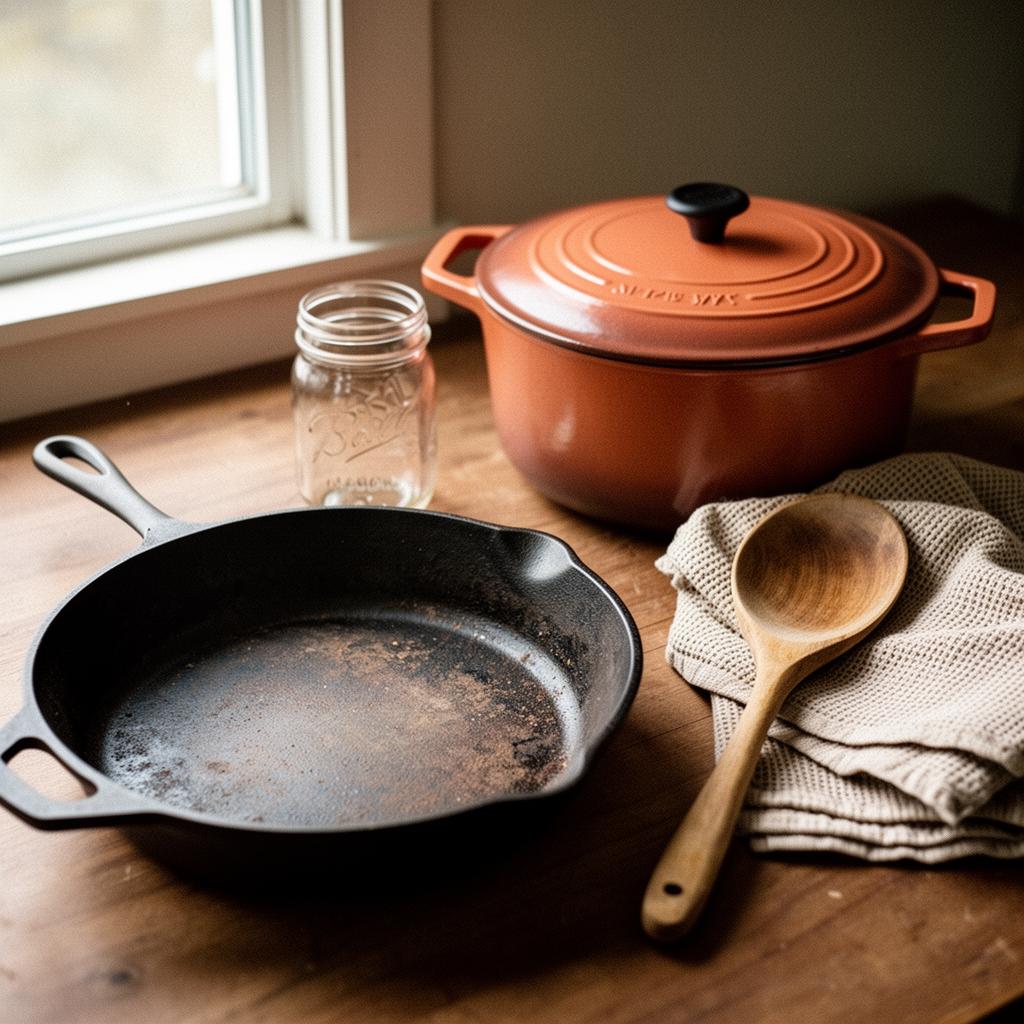
The instruments
Tools That Earn Their Place
A short list. Most of this is inherited, a grandmother's skillet seasoned for forty years cannot be bought. But you can start your own.
10- and 12-inch cast-iron skillets
The 10 is for cornbread; the 12 is for everything else. Buy them once; pass them down.
Enameled Dutch oven
5–7 quarts. For gumbos, braises, beans, soups. The single most useful pot in the kitchen.
Heavy stock pot (8 quart+)
For greens, large bean cooks, Lowcountry boils.
Wooden spoons (flat-edged)
Flat edge for stirring roux into the corners. A long handle for the deep pot.
Microplane / box grater
For garlic, ginger, citrus zest. Fast and even.
Mason jars (quart and pint)
For pot likker, stocks, pickles, hot sauce, leftovers. Buy a case.
Large fine-mesh strainer
For straining stocks, rinsing rice, washing beans.
Heavy sheet pans
Half-sheet, rimmed. Roasting, oven roux, drying greens after washing.
Probe thermometer
For barbecue, fried chicken, candy. Eyeballing only takes you so far.
Pepper grinder & salt cellar
Open and on the counter. Seasoning by hand requires it to be reachable.
The kitchen apothecary
Roots & Remedies
The Black American pantry was never just about flavor. It was always also about healing. These are the ingredients that lived at the intersection of the kitchen and the medicine cabinet, used to feed the body and to restore it. (For the deep read, see the Food As Medicine section.)
Sassafras
also: filé
Indigenous North American root and leaf. Filé powder thickens gumbo off the heat; root tea was the springtime blood-purifier of the rural South. Anti-inflammatory and diaphoretic.
Elderberry
Indigenous shrub. Cooked into syrups, jellies, and country wines (raw berries not eaten). Documented antiviral and immune-supporting properties; the standing folk preventative for cold and flu.
Dandelion greens
Wild bitter green. Wilted in pot likker or sautéed in bacon fat. Liver-supporting and gently diuretic; bitter principles stimulate digestion.
Yellow dock
Wild bitter green of the rural South. Cooked like dandelion. Iron-rich; the traditional Black Southern blood-builder for anemia.
Collard greens
Calcium comparable to dairy, exceptional vitamin K and folate. Long braising preserves and concentrates minerals into the pot likker.
Pot likker
Mineral-dense braising liquid — bioavailable calcium, iron, and potassium. Drunk warm as a restorative after illness or hard labor.
Ginger
Anti-inflammatory and anti-nausea. The standing kitchen remedy for upset stomach, motion sickness, and morning sickness.
Garlic
Documented antimicrobial and cardiovascular benefits. Raw cloves in honey are a household tonic for sore throat and the first edge of a cold.
Cayenne pepper
Capsaicin stimulates circulation and acts as a topical and internal pain reliever. The hot toddy with cayenne is a standing chest-cold remedy.
Apple cider vinegar
Probiotic acetic acid. Traditional blood-sugar regulator and the base of fire cider and the morning hot tonic.
Okra
Soluble prebiotic fiber that feeds gut microbiota. Emerging research on blood-sugar stabilization; the mucilage soothes the digestive tract.
Peanuts
West African legume — complete protein, healthy fats, and niacin. The foundational subject of George Washington Carver's research.