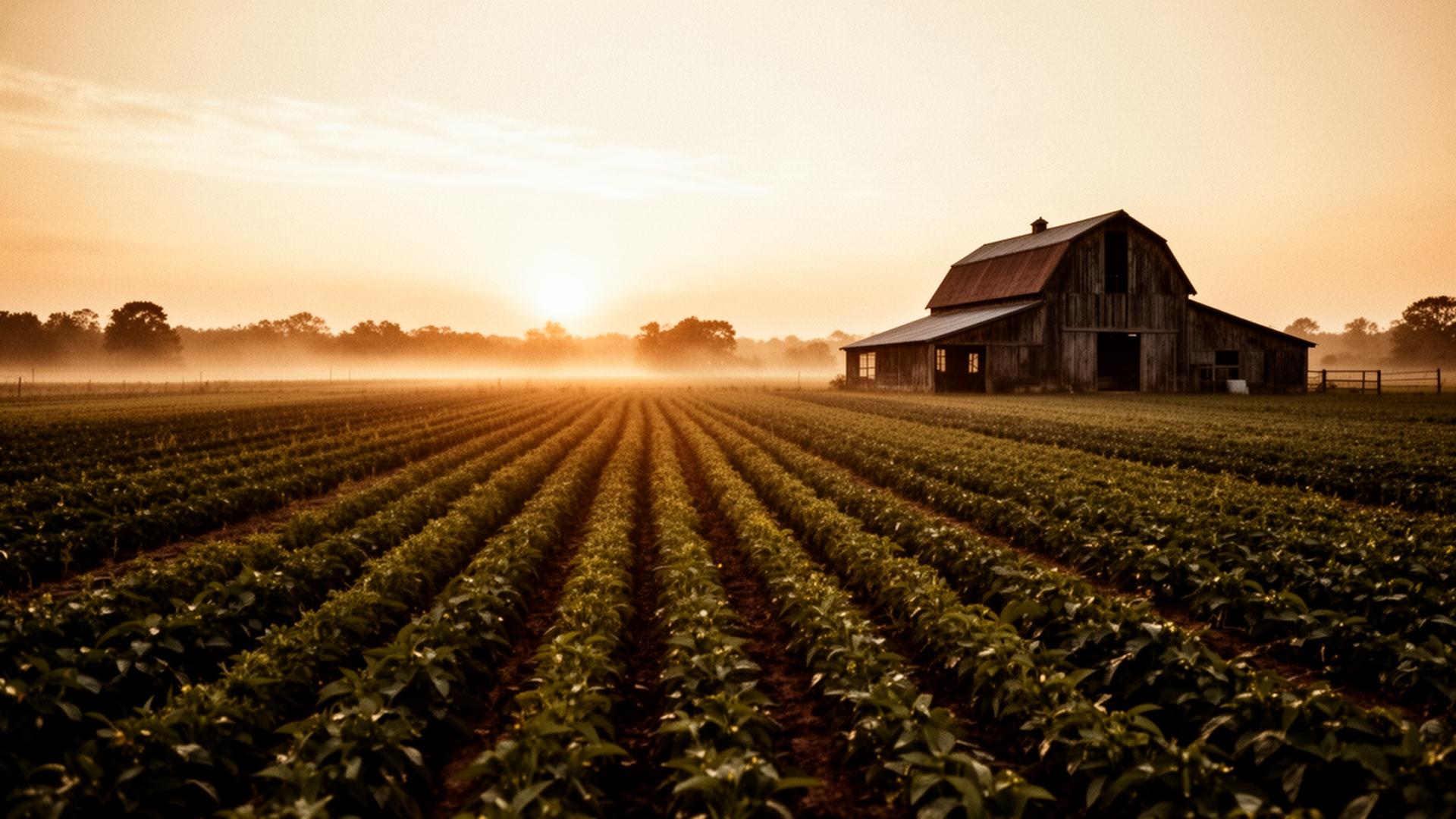
Section 4 · Land & Science
The Soil Underneath The Cuisine
Black agricultural knowledge, scientific method, and the politics of land, the ground the pantry stands on.
Before there is a recipe there is a crop, and before there is a crop there is a person who knows how to grow it on a particular piece of ground. This section holds the agricultural knowledge and scientific method that underwrite everything else in the framework. Carver's systematic inquiry, the West African rice tradition carried to the Lowcountry, Tuskegee's research legacy, and the long story of what Black people have been able to grow on the land they were able to hold.
I.
Carver's Method: What Else Can This Be?
George Washington Carver is most often remembered as the man who found a hundred and one things to do with a peanut. That summary undersells him. What he was actually doing was a systematic inquiry into a single ingredient, what could it become as a food, a flour, a milk, a paste, a dye, a soap, a cosmetic, a fuel, an industrial material, across every plausible application.
That is a culinary philosophy and a scientific method at the same time. It is also the working logic of this framework. Every technique chapter here asks the same question Carver asked: given this ingredient, given this byproduct, given this scrap, what else can this be? The framework is an extension of his method applied to a cuisine.
Carver also did the agricultural work that made the inquiry necessary. He taught Southern farmers, and Black farmers in particular, to rotate cotton with peanuts, sweet potatoes, and cowpeas to restore exhausted soil. The crops that came out of that rotation are core pantry items in this canon. The food and the science were the same project.
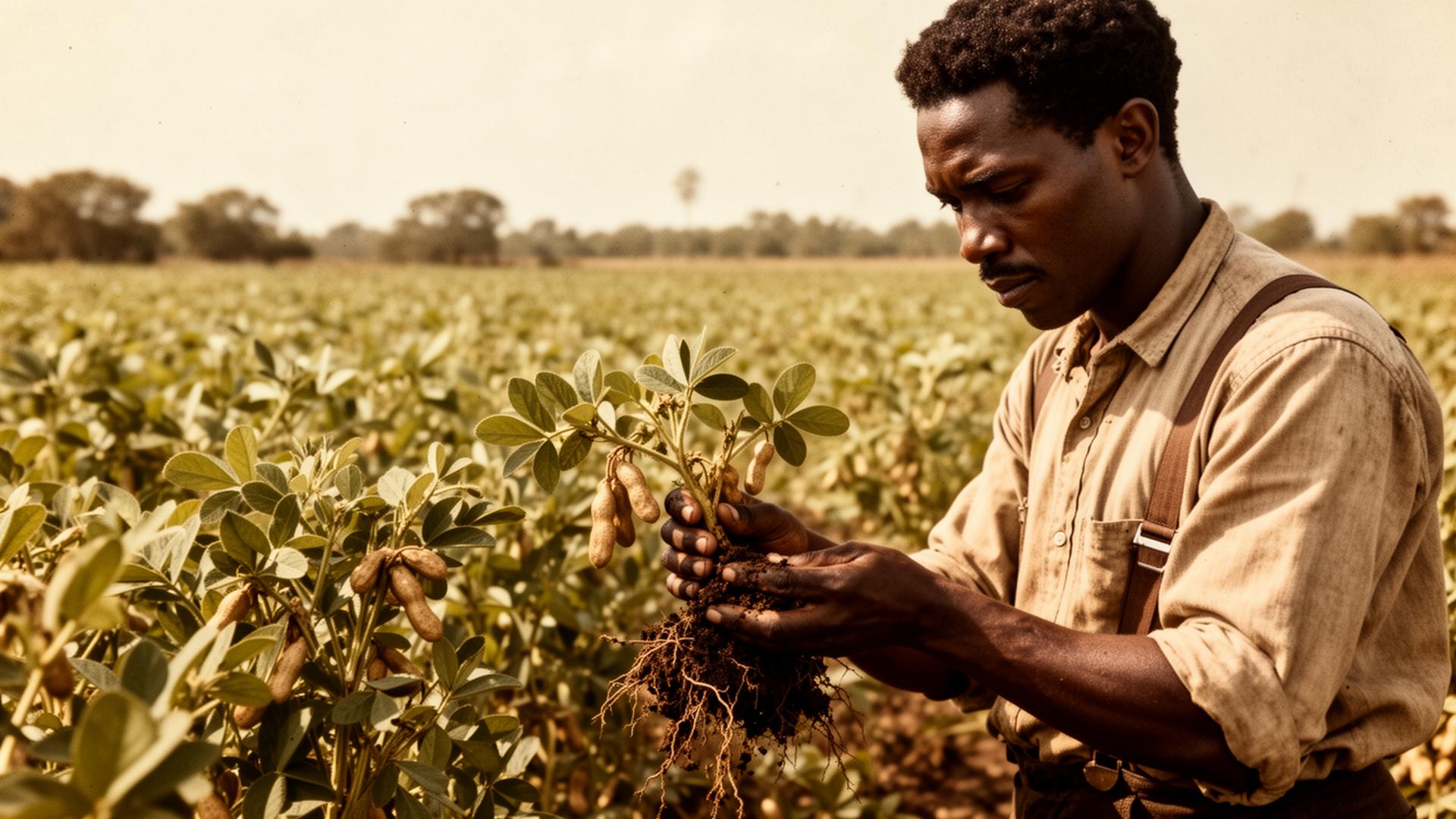
"What else can this be?", the working question.
— after George Washington Carver
II.
Gullah Geechee Rice and Carried Knowledge
The story usually told about Carolina rice is that European planters introduced it. The truer story is that the planters brought enslaved West Africans specifically because they already knew how to grow it. Rice cultivation in the Senegambia and Sierra Leone regions had been a sophisticated agricultural system for centuries: tidal flooding, dike construction, transplanting seedlings, threshing with mortar and pestle, winnowing with fanner baskets.
Enslaved Africans carried that entire knowledge system across the Atlantic. The Lowcountry rice economy, and the wealth it built for white planters, was constructed on top of West African agricultural science. The fanner basket woven by Gullah Geechee artisans today is the same tool, made the same way, used to do the same job.
This is the model for understanding the broader tradition of Black American agricultural knowledge. Enslaved people did not simply provide labor. They managed crops, selected seed, timed plantings, built irrigation, and carried plant material. Okra, black-eyed peas, sorghum, watermelon, sesame, yams, hot peppers: all of it traveled in pockets and braids and memory. The pantry has a passport.
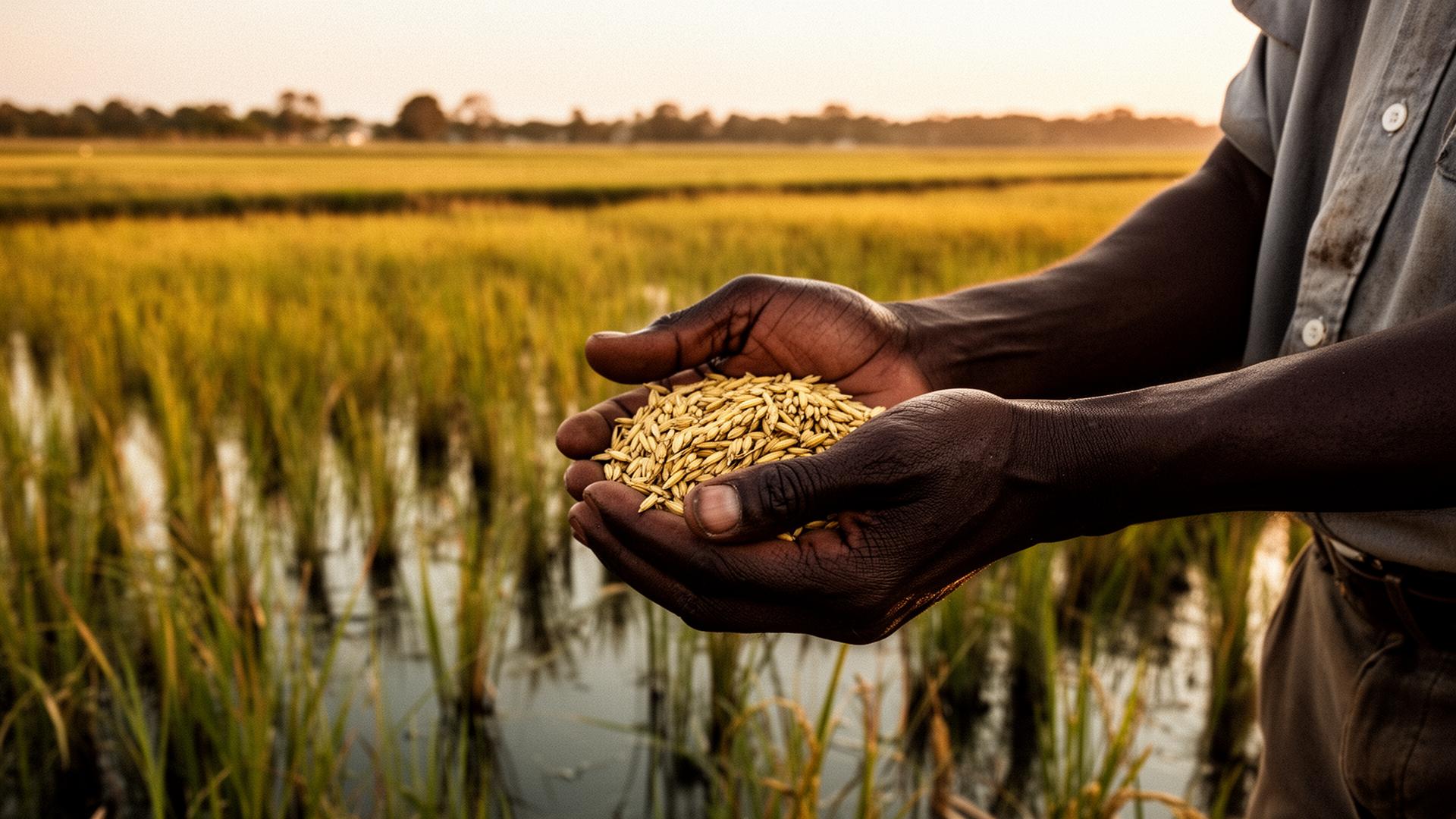
"Carolina rice was West African knowledge, carried."
— Chef Cole Lawson
III.
Tuskegee Beyond Carver
Carver was the most famous figure at Tuskegee, but he was part of a longer institutional commitment to agricultural science as a tool of Black self-determination. Booker T. Washington built the school around the conviction that scientific farming and skilled trades would underwrite Black freedom in the post-Reconstruction South.
From that came the Movable School (the Jesup Wagon and its successors), which carried agricultural extension directly to rural Black farmers — soil testing, seed selection, food preservation, livestock care, home economics — at a time when state extension services would not serve them. From that also came research on cowpeas, sweet potatoes, soybeans, and crop rotation that shaped Southern smallholder agriculture for decades.
Tuskegee's agricultural research legacy is one of the foundations of Black American food culture. It professionalized the knowledge that was already alive in Black kitchens and gardens, and it did so inside an institution that treated Black farmers as scientists and experts in their own right.
IV.
Fannie Lou Hamer and Freedom Farm Cooperative
Fannie Lou Hamer is most often remembered for the 1964 Mississippi Freedom Democratic Party challenge in Atlantic City and for the line that became a movement: 'I am sick and tired of being sick and tired.' She was also one of the most important agricultural organizers in twentieth-century America, and that part of her work belongs squarely inside this framework.
In 1969, Hamer founded Freedom Farm Cooperative in Sunflower County, Mississippi, in the heart of the Delta. It began with forty acres and grew to nearly 700. It produced cash crops to fund itself, but the heart of it was the 'pig bank' that loaned breeding sows to Black families so they could raise their own pork; a vegetable garden program that fed the cooperative's members directly; a Head Start program; an affordable housing initiative; and a refusal of the sharecropping logic that had governed the Delta for a century. Hamer's argument was simple: a vote without land underneath it was not freedom.
Freedom Farm dissolved in 1976, undermined by drought, by white local resistance, and by the difficulty of holding a cooperative together against the headwinds of the Mississippi Delta. But its model, food sovereignty as a precondition of political freedom, ran directly into the Federation of Southern Cooperatives, the Black Panthers' Free Breakfast Program, the Detroit Black Community Food Sovereignty Network, Soul Fire Farm in upstate New York, and the contemporary Black land trust movement. Every Black-led food sovereignty project in this country traces a line back to Hamer's pig bank.
V.
The Ingredient Is the Archive
Every ingredient on this canon's pantry list is also a historical document. The okra in the pot is a direct line to the Bight of Biafra. The black-eyed pea on the New Year's plate carries a passport stamped in the Senegambia. The benne wafer on the Charleston tea tray is sesame seed brought across the Atlantic in the pockets, the hair, and the cargo holds of the Middle Passage. The Carolina Gold rice grown on the Combahee is a West African cultivar, brought and bred and tended by the people who knew it best.
This is what we mean when we say the ingredient is the archive. The seeds carried memory in a way the written record was not allowed to. When Black farmers selected and replanted okra in Alabama for two hundred years, when Geechee families saved benne seed on the Sea Islands generation after generation, when Black Appalachian cooks kept the cushaw squash and the white half-runner bean alive in their kitchen gardens — they were maintaining a living archive of African and African American agricultural heritage that no library, no university, and no state agricultural extension was preserving.
We can read the cuisine the same way a paleobotanist reads a seed bank. The presence of okra, sorghum, cowpeas, watermelon, sesame, hot peppers, yams, and African rice in the American South is not a botanical accident. It is the record, in living plant material, of what enslaved Africans carried with them and refused to lose. Treat the pantry as a primary source. Treat the seed catalog as a citation list.
This is also why seed-saving work today — the Ujamaa Cooperative Farming Alliance, Truelove Seeds, the work of seedkeepers like Ira Wallace at Southern Exposure — is not a nostalgic project. It is the continuation of an archival practice that began in the holds of slave ships. Every heirloom variety kept in production is a sentence kept in the record.
VI.
Land Access and the Shape of the Cuisine
Black American cooking has changed dramatically based on what land Black people had access to and when. The cuisine is not a fixed object. It is a record of agricultural and political conditions.
On the plantation, the cuisine was built from rations, the provision ground, hunting, fishing, and what could be coaxed from a small kitchen garden in stolen time. After Emancipation, sharecropping kept most Black Southerners on land they did not own and in a debt cycle that constrained what they could grow and keep. Where Black families did acquire land (the high-water mark was roughly fifteen million acres around 1910), the cooking expanded: more poultry, more pork raised on the place, more put-up vegetables, more grain milled locally.
The twentieth century then took most of that land back. Through discriminatory USDA lending, heirs' property loss, terror, and forced sale, Black land ownership collapsed by more than ninety percent. The Great Migration was, among other things, a response to that loss. The cuisine moved with the people: into Northern and Western cities, into corner stores and church kitchens and small restaurants, into a relationship with industrial groceries that the rural Southern kitchen had not had.
Naming this is part of the framework. The pantry, the techniques, the regional expressions: all of them carry the imprint of who controlled the land. Initiatives like the Federation of Southern Cooperatives, Soul Fire Farm, and contemporary Black land trusts are not separate from the cuisine. They are the cuisine's agricultural infrastructure being rebuilt.
Read next