Section 2 · Philosophy
The Values Underneath
Why we cook the way we cook. The principles that hold the technique up.
Acuisine is a set of techniques and a set of beliefs. The techniques are the chapters of the framework. The beliefs are this page. They are the why beneath the what, the reason a pot of greens is a pot of greens and not a side of steamed leaves.
I.
Hospitality
We feed people. That is the first sentence. Before there was a restaurant industry, before there was a cookbook industry, there was a kitchen with the door open and a place at the table for whoever came in.
Hospitality in this tradition is not a service-industry word. It is a moral one. To feed someone is to recognize them. To set a place is to insist on their dignity. Leah Chase fed the Freedom Riders. Georgia Gilmore fed the Montgomery boycott. Sylvia Woods fed Harlem for fifty years. The food was the welcome and the welcome was the politics.
II.
Resourcefulness
Every part of the animal. Every scrap of the vegetable. Every stale end of bread. This is not a poverty value. It is a sophistication.
Black American cooking treats the kitchen as a closed system. The pot likker becomes the next braise. The bones become stock. The greens stems become a pickle. The biscuit dough trim becomes a quick fritter. George Washington Carver formalized it as agricultural science. Every grandmother formalized it as the rhythm of a week. The waste is in the throwing away, not in the ingredient.
III.
Technical & Ethical Transformation
We make the most of, and we make the best of. Black American cooking has a long record of taking what was given, the offcut, the imposed technique, the rationed ingredient, and producing something better than its source.
This is not making do. It is transformation as a discipline. Dark roux from a blond ratio. Pot likker from boiling water. Pit barbecue from a hole in the ground. The ethical claim and the technical claim are the same claim: what we received was not the limit of what could be made.
IV.
Community & Abundance
Sunday dinner is the canonical scene. A pot of greens, a pan of cornbread, a platter of fried chicken or smothered something, a pitcher of sweet tea, and however many people show up get fed. The plate stretches.
Abundance in this tradition is not measured in luxury. It is measured in whether everyone eats and whether anyone goes home with a plate wrapped in foil. Community is the unit of cooking. The cook is not the soloist. The table is the instrument.
V.
Seasonal & Local Eating
Edna Lewis organized The Taste of Country Cooking by the year in Freetown, Virginia, what the garden gave that week was what was on the table. This is older than the restaurant idea of 'farm to table.' It is the original mode.
The Southern Black kitchen ran on what was in season, what was put up from last season, and what was hunted, foraged, or bartered. Modern industrial food made it possible to ignore that rhythm. The framework's position is that the rhythm is the cuisine.
VI.
Food Is Medicine
Food is medicine. It has always been medicine. Black American cooks have never separated the act of feeding from the act of healing. The same hands that seasoned the pot understood which root reduced a fever, which green strengthened the blood, which herb calmed the body after a long day of labor.
That knowledge was not incidental to the cuisine. It was foundational to it. The full record of that tradition lives in the Food As Medicine section of this framework — the ancestral plants, the folk remedies, the nutritional science, and the contemporary healers carrying it forward.
VII.
Oral Tradition & Memory
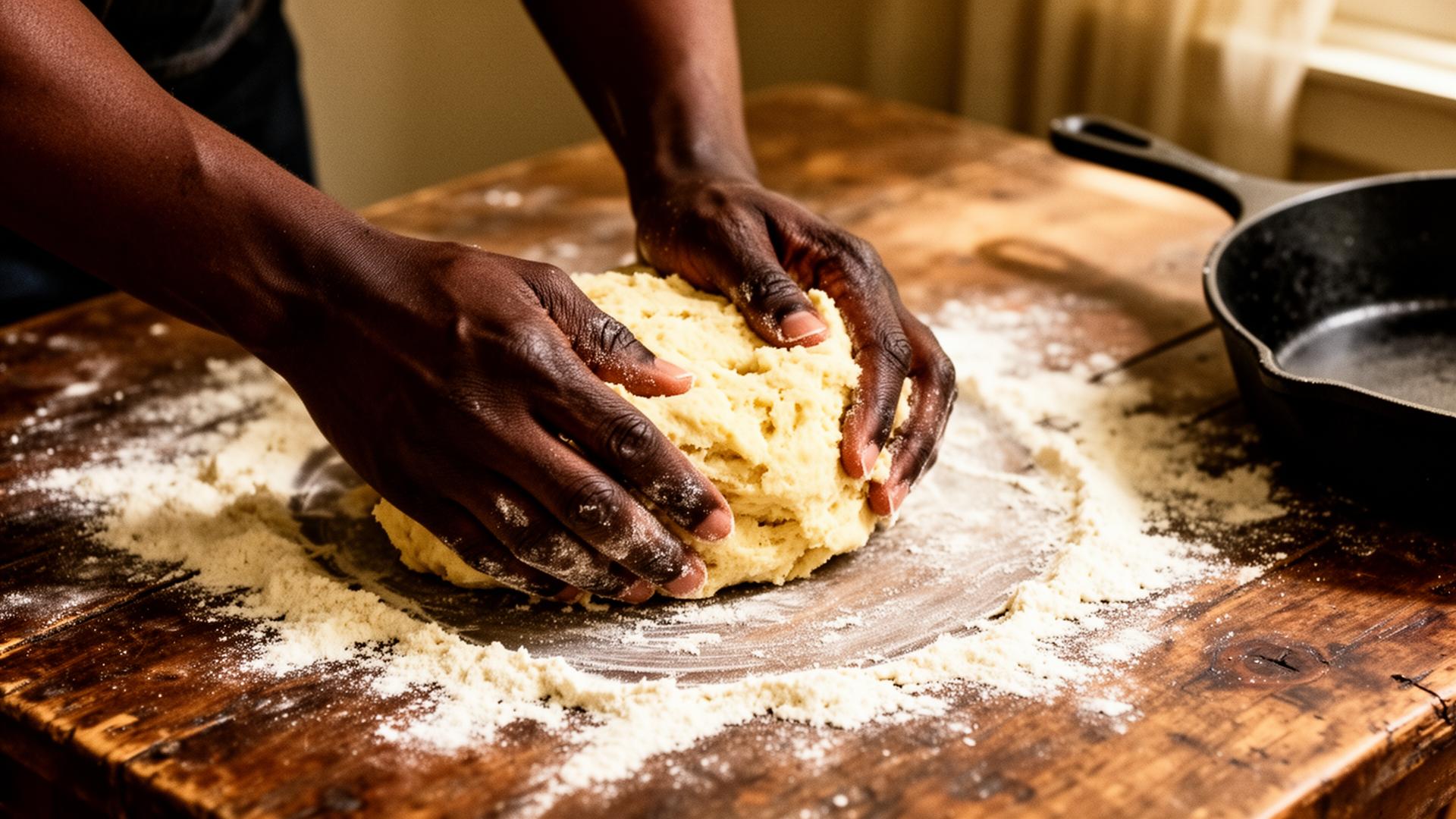
Most of this canon has never been written down. It has been taught hand to hand, by watching and doing, by 'a little of this, a pinch of that, until it looks right.' The recipe is in the gesture, and the gesture is in the next person who learns it.
We honor that. This framework writes things down because the oral tradition has been under attack, through migration, through displacement, through the deaths of elders we did not record in time. Writing it down is a defensive act. The oral form remains primary.
VIII.
Knowledge as Inheritance
A skillet seasoned for forty years cannot be bought. A pot of greens cooked the way your grandmother cooked them is also a pot cooked the way her grandmother cooked them. Cooking, in this tradition, is one of the longest unbroken lines of Black knowledge transmission in this country.
The framework treats this not as nostalgia but as a working asset. The person who learns to make a real pot of red beans is inheriting a technical lineage that runs back through Louisiana, the Caribbean, and West Africa. They are also responsible for what they pass on next.
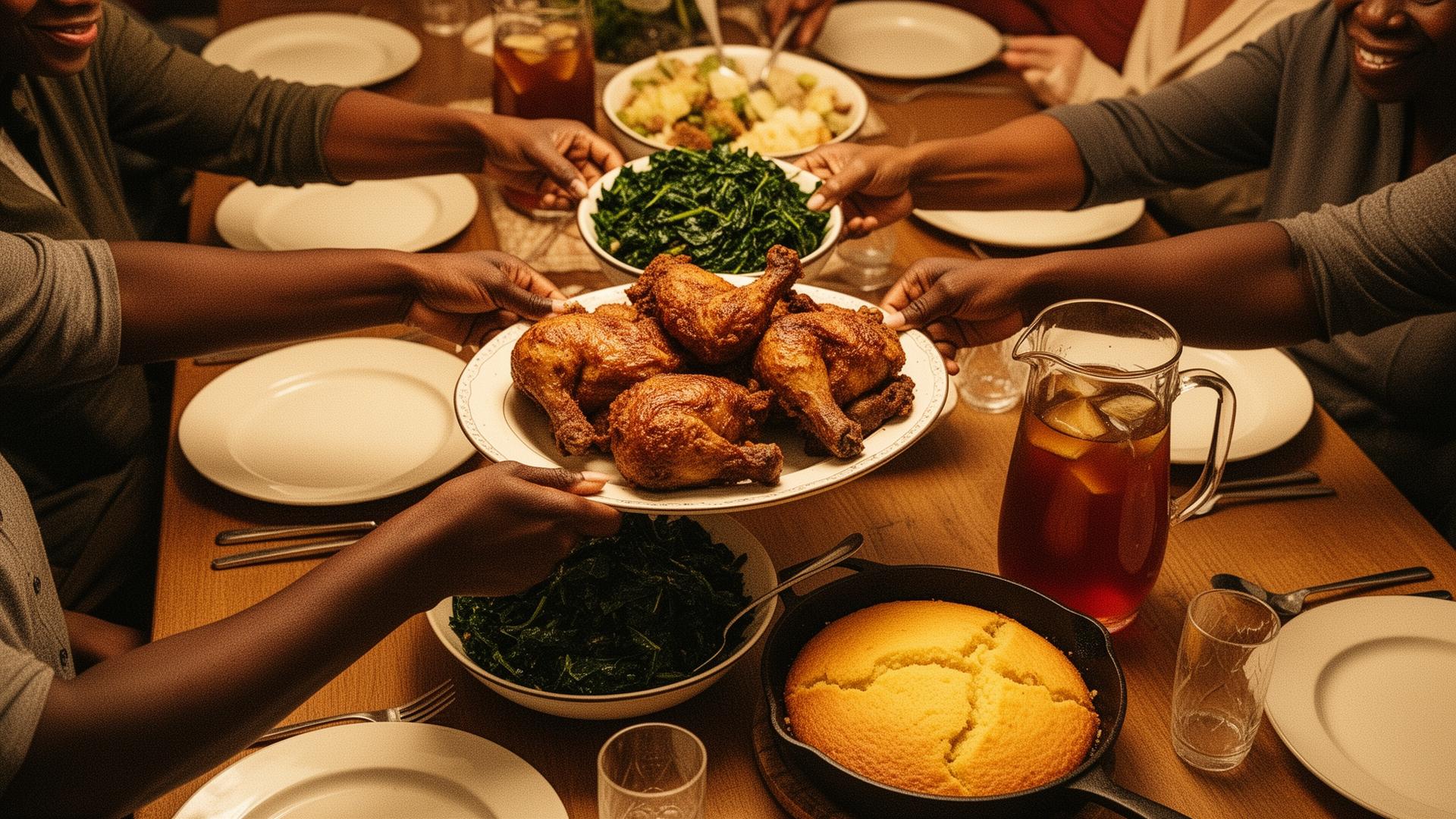
"The plate stretches because the table is the instrument."
— Chef Cole Lawson
Read next