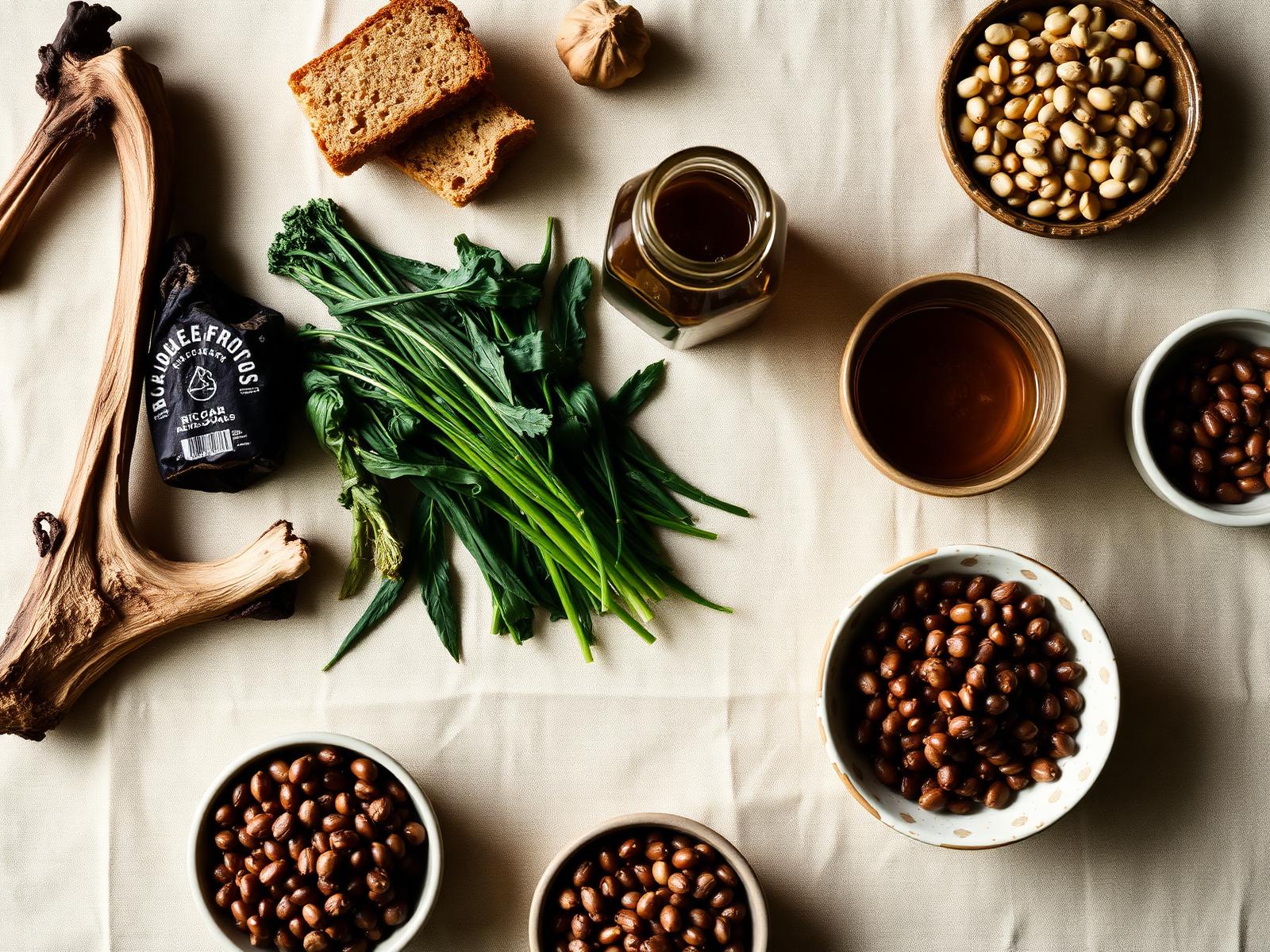
Every part of the animal. Every scrap of the vegetable. Every stale end of bread. This is not scarcity thinking. It is sophistication. It is a philosophy of the kitchen as a closed system where nothing leaves without first becoming something.
George Washington Carver built an entire agricultural science around this principle. Edna Lewis wrote it into the rhythm of her Virginia year. Every Black grandmother who ever made something out of nothing was operating on the same axiom: the waste is in the throwing away, not in the ingredient.
Historical context
From the enslaved cook given the scraps and making the feast, to Carver's three hundred uses for the peanut, to the modern whole-animal butchery movement. This is a through-line. It is a technical philosophy, and it deserves to be taught as one.
Technical definition
Yield thinking is the systematic practice of treating every part of every ingredient as raw material for a future dish, organizing the kitchen as a closed loop in which the byproducts of one preparation are the inputs of the next. Mechanically, it requires planning every cook in three stages: the primary dish, the byproduct (stock, pot likker, rendered fat, scrap, bone), and the secondary dish built from that byproduct. It produces a kitchen with twice the depth of flavor at half the ingredient cost, and it produces cooks who think in systems rather than in single recipes. It is the most under-taught technical philosophy in American cooking and the one Carver formalized as a scientific method.
How to execute it
- 01
Plan in threes: primary dish, byproduct (stock or pot likker), and secondary dish built from what's left. Every pot is two meals.
- 02
Label and freeze stocks, pot likker, rendered fats, and bones in clear portions. Your pantry is a library.
- 03
Treat greens stems, broccoli stalks, collard ribs, and melon rinds as ingredients, not trim. Pickle, braise, or ferment them.
- 04
Use every cut of the animal: oxtails for Sunday, neck bones for beans, hog jowl for seasoning, tails and feet for stock.
- 05
Stale bread becomes pudding, croutons, or a crust for baked casseroles. Nothing in the bread drawer gets thrown away.
Ratios, times, temperatures
- Primary : byproduct : secondary ≈ 1 : 1 : 1 by effort. Plan the second meal before you start the first.
- Scrap stock: 1 lb clean vegetable trim per 2 quarts water, simmered 45 min, strained.
- Rendered fat: keep in a glass jar in the fridge; strain each time you add.
Variations
- Carver-style yield: one core ingredient, documented twenty ways (peanut, sweet potato, pecan, collard).
- Edna Lewis seasonal rhythm: what the garden gives this week determines three meals forward.
- Urban yield (Great Migration): corner-store constraint as its own creative discipline.
Common failure points
- ✕Treating yield thinking as frugality. It is a flavor decision first. Scraps cook down into depth.
- ✕Not labeling. Unlabeled frozen stock becomes unidentifiable within two weeks.
Canonical expressions
Oxtails on Sunday → oxtail-stock greens on Tuesday
The Sunday braise produces a quart of gelatinous oxtail likker; Tuesday's collards are braised in it instead of water. One bone, two meals.
Whole roasted chicken → chicken stock → chicken-and-rice
The Sunday roast becomes Monday's stock pot, which becomes Tuesday's chicken-and-rice with the picked meat. The Edna Lewis weekly rhythm.
Greens stems pickled in pepper vinegar
The collard ribs and turnip-green stems most kitchens trim and discard, brine-pickled in the vinegar that finishes the next pot of greens.
Cracklin' bread from rendered fat
Rendering pork fat for greens-cooking produces cracklin's; the cracklin's go into the cornbread batter; the cornbread feeds the bowl of pot likker. Three dishes, one ingredient.
Stale cornbread bread pudding
Yesterday's cornbread becomes the base of today's bourbon-sauced bread pudding. Nothing in the bread drawer is thrown away.
Recipes from Black cooks & writers
- Edna Lewis: Taste of Country Cooking menus (by month)
- Michael Twitty: Afroculinaria on the whole animal
What else can this be?
Extensions
Teach yield thinking as its own course. Build recipes in sets of three: the primary dish, the stock or pot likker it produces, and the second dish built from what's left. This is how a kitchen becomes a system.
- →Build a Carver-style thirty-day study of a single ingredient — sweet potato, peanut, pecan, collard — documenting one new use a day across savory, sweet, fermented, preserved, and beverage applications.
- →Run a kitchen scrap stock on a weekly cycle: every onion end, carrot peel, celery butt, and herb stem goes in a labeled freezer bag; Sunday it becomes stock; Monday it becomes the braising liquid for beans.
- →Render every fat that passes through the kitchen — bacon, duck, brisket trimmings, smoked-turkey fat — into a labeled fat library; choose by dish the way a baker chooses sugar.
- →Build an end-of-the-week 'finish-the-pantry' menu as a regular practice, using up the last cup of pot likker, the last quarter of cornbread, the last spoonful of chow-chow as a single intentional plate.
- →Treat fryer oil as a multi-stage ingredient: first day fish, second day hush puppies and sweet potatoes, then strain and use cold for vinaigrette base before discarding.
Further reading
- The Taste of Country Cooking, by Edna Lewis (Library)
- Eating While Black, by Psyche Williams-Forson (Library)
- The Cooking Gene, by Michael W. Twitty (Library)
- The Taste of Country Cooking, by Edna Lewis
- George Washington Carver Bulletins (Tuskegee Archives)