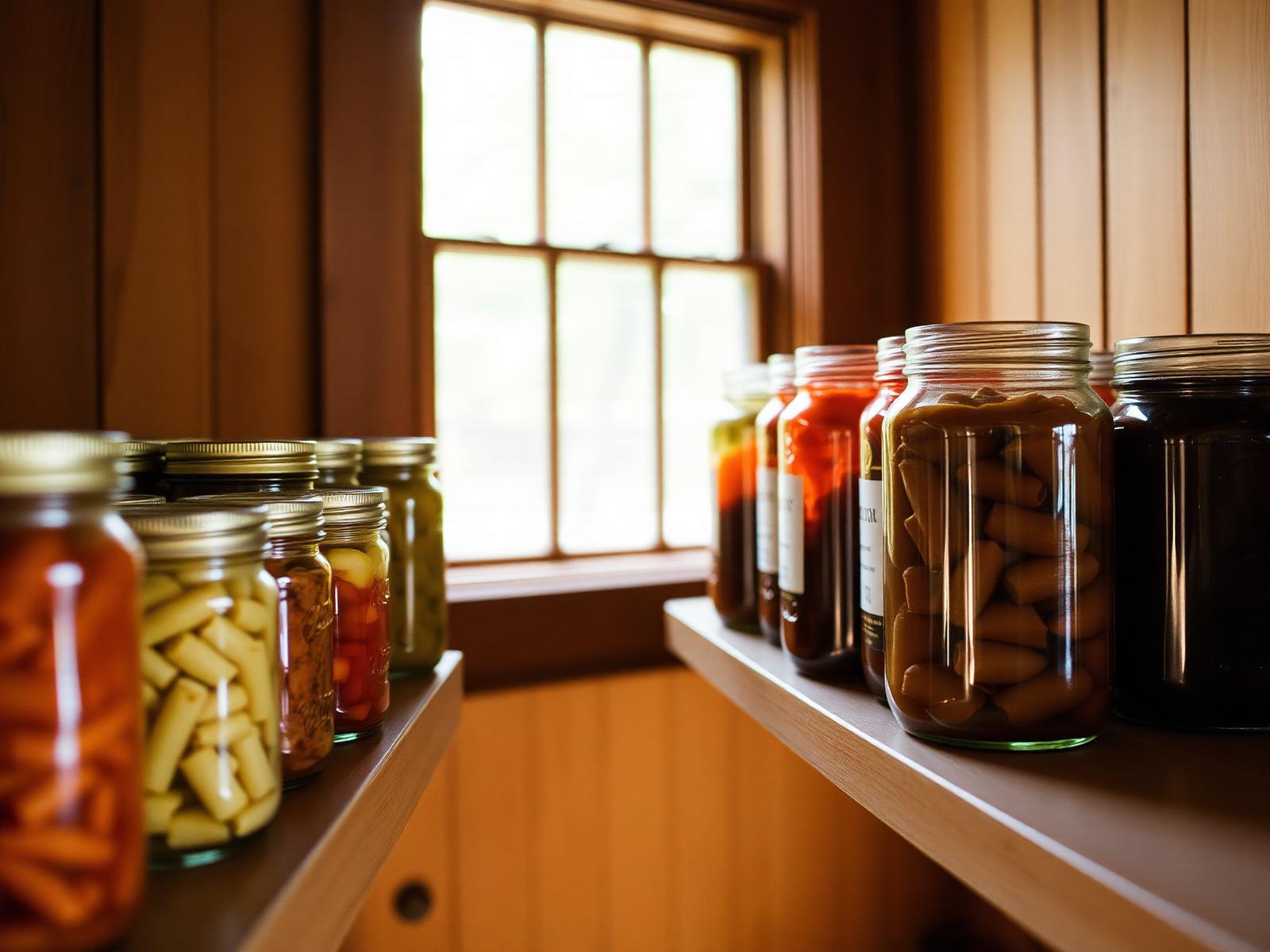
Before refrigeration, preservation was survival. Pickling, curing, fermenting, drying, smoking, the Black Southern pantry was built on techniques that extended the life of a harvest and, in doing so, built flavor.
Chow-chow, hot pepper vinegar, cured hams, lacto-fermented cabbage, dried beans, preserved peaches, hot sauce. These are not garnishes. They are a parallel pantry that every serious kitchen in the tradition keeps running.
Historical context
The hot sauce tradition in particular, a vinegar, a chile, sometimes a little salt, runs from the Caribbean through Louisiana up through the Carolinas and out across the country. Every household had a bottle. Many still do.
Technical definition
Fermentation and preservation in this tradition is the controlled use of salt, acid, smoke, sugar, low temperature, and time to extend the life of a harvest while building flavor that fresh ingredients cannot produce. Mechanically, lacto-fermentation uses 2–2.5% salt to suppress spoilage organisms while allowing lactobacillus to acidify the substrate; vinegar pickling uses an acid bath of pH ≤ 4.2; curing uses salt and (sometimes) nitrite to draw water and inhibit pathogens; smoking deposits antimicrobial phenols. The result is a parallel pantry — chow-chow, pepper vinegar, cured ham, hot sauce, pickled rind, fermented cabbage — that every serious kitchen in the canon keeps running alongside the fresh one.
How to execute it
- 01
Pepper vinegar: pack a clean bottle with fresh small hot peppers (Tabasco, serrano, cayenne). Heat distilled white vinegar to just under a boil, pour over the peppers, cap loosely until cool, then seal. Rest 2 weeks before use.
- 02
Chow-chow: chop cabbage, green tomatoes, bell pepper, and onion; salt at 2% weight overnight; rinse briefly; pack with turmeric, mustard seed, and hot vinegar brine; process or refrigerate.
- 03
Lacto-fermented cabbage: shred; salt at 2% by weight; pack tightly under its own brine; ferment at room temp 5–14 days until it tastes right.
- 04
Quick-pickled watermelon rind: peel the green, leave a little pink; brine 1:1 vinegar:water with sugar and spice; hot-pack.
- 05
Home hot sauce: ferment chopped peppers, garlic, and salt (2.5–3%) for 1–2 weeks; blend with vinegar to taste; strain if desired.
Ratios, times, temperatures
- Lacto-ferment salt: 2–2.5% of the vegetable weight.
- Vinegar pickles: 1:1 vinegar to water, plus 1–2 tablespoons sugar and 1 tablespoon salt per quart.
- Cured ham (country style): 3.5% salt of the green-weight ham, 0.25% pink curing salt (Prague Powder #1), hung in controlled conditions.
Variations
- Koji-cured Southern ham (contemporary): koji spores on pork, aged 8–12 weeks. A modern expansion of the tradition.
- Fermented hot sauce: longer, deeper, funkier than a straight vinegar sauce.
- Brine-pickled okra, dilly beans, and green tomatoes: the Southern giardiniera.
Common failure points
- ✕Under-salting ferments. Less than 2% salt invites mold before lactic acid takes over.
- ✕Sealing ferments airtight too early. CO₂ needs to escape, use a loose lid or airlock for the first week.
- ✕Reusing unwashed jars for pickling. Sanitation is the difference between preservation and poisoning.
Canonical expressions
Chow-chow
The pickled cabbage-and-vegetable relish that finishes a plate of beans, peas, or pork; sweet-sour, slightly hot, made in late summer to feed the winter.
Pepper vinegar
Whole hot peppers in distilled white vinegar, rested two weeks, the finishing acid for greens. Every Black Southern kitchen has a bottle on the table.
Country ham (Upper South cure)
Salt-cured, hung, aged hams of Virginia, Tennessee, and Kentucky — the Black-built craft tradition that the white country-ham brands are downstream of.
Pickled watermelon rind
The yield-thinking pickle: the green-and-pink rind most cooks discard, brined in spiced vinegar and served with cured pork.
Home hot sauce (fermented or vinegar-quick)
Mash of chiles, salt, garlic, fermented one to two weeks and blended with vinegar — the bottle that anchors the table.
Pickled okra and dilly beans
The Southern giardiniera: brine-cured small okra and green beans served alongside cold cuts, deviled eggs, and sandwich plates.
Recipes from Black cooks & writers
- Nicole A. Taylor: Watermelon & Red Birds (preservation chapters)
- Michael Twitty: Afroculinaria on Southern preservation
What else can this be?
Extensions
Modern lacto-fermentation belongs inside this tradition, not outside it. So does aged vinegar-making, koji-cured Southern hams, and fermented hot-sauce production at a craft scale.
- →Koji-cure a country-ham-style pork loin: rub the green meat with rice koji, refrigerate uncovered eight to twelve weeks, slice paper-thin. A modern fermentation extension of the Upper South cure.
- →Lacto-ferment collard ribs and mustard-green stems for a sour, crunchy garnish that returns the trim to the plate.
- →Build a fermented-pepper hot sauce from a single named chile (datil, Carolina cayenne, peach habanero) and bottle it under your kitchen's name as a yearly seasonal release.
- →Cure smoked pork jowl into Black Southern guanciale; use it as the seasoning meat in a pot of red beans for an Upper-South-meets-New-Orleans hybrid.
- →Vinegar-preserve last summer's tomatoes (whole, in jars, with garlic and pepper) and use them in February as the acid base for a smothered-okra dish that should not be possible in winter.
Further reading
- The Rise, by Marcus Samuelsson
- Watermelon & Red Birds, by Nicole A. Taylor (Library)
- The Cooking Gene, by Michael W. Twitty (Library)
- The Rise, by Marcus Samuelsson
- Watermelon & Red Birds, by Nicole A. Taylor