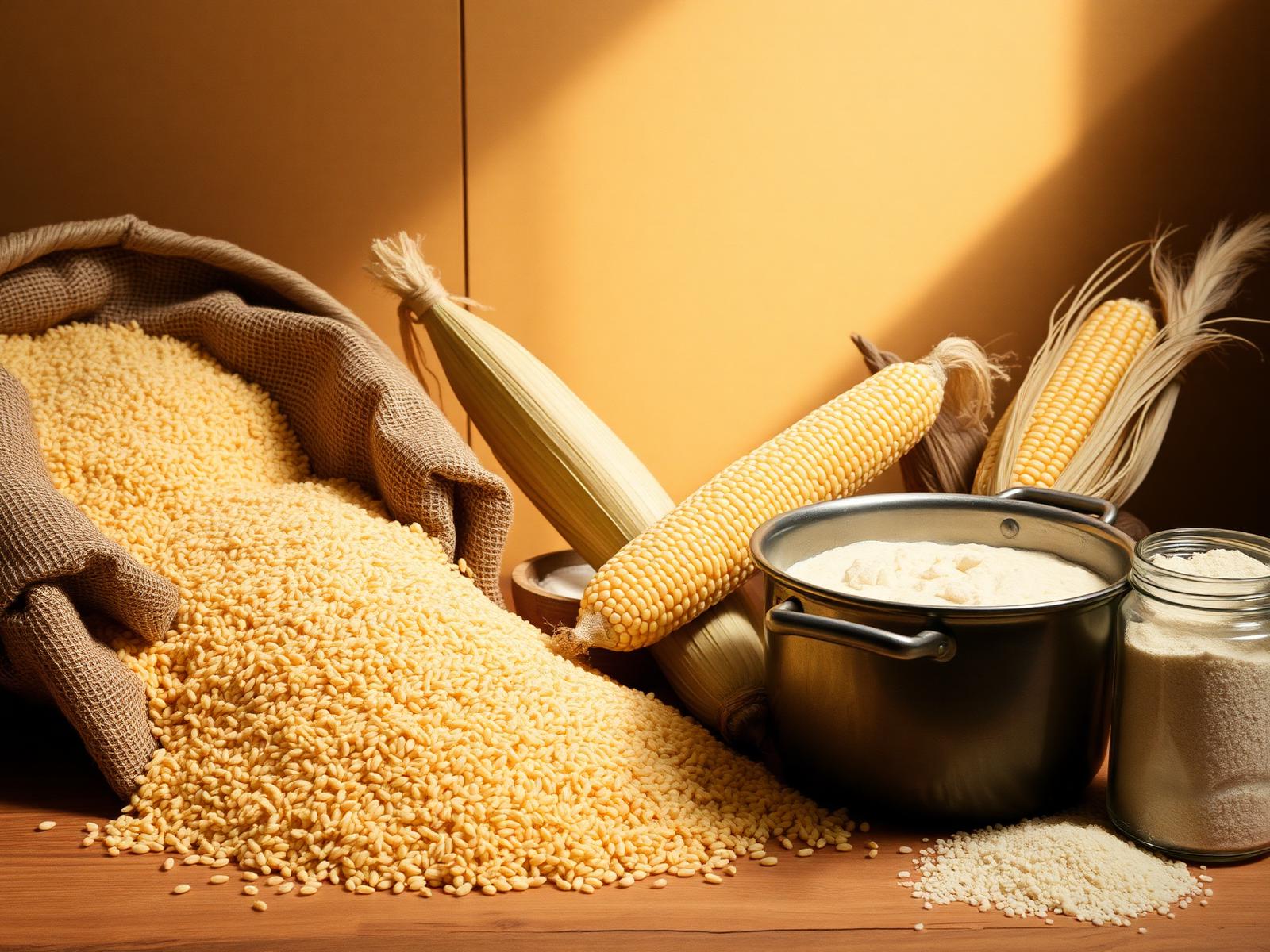
Grains are not a side. In this tradition, grains are the center of the plate, and the cook's relationship to them is the cook's relationship to the whole meal. African rice on the Carolina coast, Indigenous corn turned to grits and cornbread across the South, sorghum and millet traces that still live in the pantry. This is a full chapter, not an accompaniment.
Get the grain right and the rest of the plate builds itself. Get it wrong and nothing else can save the meal.
Historical context
The rice culture of the Lowcountry was built by enslaved Africans from the Senegambia and the Windward Coast who already knew rice better than the Europeans who owned the plantations. Judith Carney's Black Rice makes the case definitively: Carolina Gold is an African grain, in technique and in origin. Cornmeal and hominy, the other half of the story, are the Three Sisters inheritance from Indigenous North America, turned into cornbread, spoonbread, ash-cake, and grits by Black hands.
Technical definition
The grain technique of this canon is the precise control of starch hydration, gelatinization, and crust formation across rice, cornmeal, and grits to produce a base that carries the rest of the meal. Mechanically: rice is cooked by absorption (1 part rice : 1.75 parts liquid) so the starch fully gelatinizes inside each grain without leaching into the pot; grits are slow-hydrated for forty-five to seventy-five minutes so the stone-ground particles fully swell into a creamy emulsion; cornbread relies on a smoking-hot fat-greased cast iron to flash-form a crust the moment the batter hits the pan. The grain is never the side dish here. It is the structural floor of the meal.
How to execute it
- 01
Rice (Lowcountry-style, absorption): rinse 1 cup long-grain rice (Carolina Gold if you can get it) until water runs nearly clear. Combine with 1 3/4 cups liquid (water, stock, or pot likker), 1 teaspoon salt, 1 teaspoon rendered fat. Bring to a boil, stir once, cover, drop to low, cook 18 minutes. Off heat, rest covered 10 minutes. Fluff with a fork.
- 02
Stone-ground grits: soak 1 cup grits in 4 cups water 30 minutes; drain off floaters. Bring 4 cups fresh water or milk (or half-and-half) to a boil with 1 teaspoon salt; whisk in grits slowly. Drop to low, stir every few minutes 45–75 minutes until creamy and tender. Finish with butter, cheese, or rendered fat.
- 03
Skillet cornbread: preheat cast iron with 2 tablespoons bacon grease in a 425°F (218°C) oven until smoking. Whisk 2 cups fine stone-ground cornmeal, 1 teaspoon salt, 1 teaspoon baking soda, 1 teaspoon baking powder. Whisk in 2 cups buttermilk and 1 egg. Pour into the smoking skillet; bake 20–25 minutes until a deep gold crust forms.
- 04
Hoppin' John (rice + field pea one-pot): cook field peas with smoked meat to tender with liquor; measure the liquor; use it to cook the rice at a 1:1.75 grain-to-liquor ratio in the same pot, peas returned on top.
Ratios, times, temperatures
- Rice (absorption): 1 part rice to 1.75 parts liquid by volume; 1 teaspoon salt per cup.
- Grits: 1 part grits to 4 parts liquid; season generously. Milk or half-and-half for breakfast grits; stock or pot likker for savory.
- Cornbread: 2 cups cornmeal : 2 cups buttermilk : 1 egg : 1 tsp salt : 1 tsp baking soda : 1 tsp baking powder. Fat preheated in the pan, not in the batter.
- Hoppin' John: 1 part dry field peas : 1 part rice : pot-likker liquid to cover by 1 inch.
Variations
- Red rice (Lowcountry): tomato paste and smoked sausage built into the absorption liquid.
- Pot-likker rice: swap water 1:1 for bean or greens pot likker.
- Ash-cake and hoecake: unleavened cornmeal cooked on a hot surface, oldest form of Southern cornbread.
- Spoonbread: eggs, milk, and cornmeal baked into a soufflé-like custard, the Upper South's refined expression.
- Hominy and stone-ground polenta: nixtamalized corn, an Indigenous inheritance that belongs in this chapter.
Common failure points
- ✕Boiling rice like pasta. Absorption is the method for this tradition; drained rice is a different cuisine.
- ✕Quick grits. Stone-ground are non-negotiable for the real texture. Instant grits are a different food.
- ✕Stirring cornbread batter smooth. Lumps are fine; overmixing makes it tough.
- ✕Adding sugar to Southern cornbread. There are regional debates, but the historic Black Southern cornbread is not a sweet cornbread.
Canonical expressions
Carolina Gold rice, plain absorption
The Lowcountry heirloom long-grain rice cooked simply in water with salt and a teaspoon of fat — the base under red rice, Hoppin' John, smothered shrimp.
Red rice
Carolina rice cooked in tomato-stained stock with smoked sausage and the trinity. The American cousin of West African jollof; Charleston Black home cooking's most identifiable rice.
Hoppin' John
Field peas and rice cooked in the same pot with smoked meat, served at the New Year's table for luck. The Lowcountry one-pot grain dish.
Stone-ground grits
Coarse stone-ground white or yellow corn cooked low and slow in milk and stock until creamy, finished with butter or smoked-fat — the breakfast and dinner base of the South Carolina coast.
Cast-iron skillet cornbread (unsweetened)
Stone-ground cornmeal, buttermilk, egg, fat, salt, leavening, baked at 425°F in a smoking-hot bacon-fat-greased pan. The historic Black Southern version: not sweet, with a deep mahogany crust.
Spoonbread
Eggs, milk, and cornmeal baked into a soufflé-like custard. The Upper South's refined, pastry-leaning expression of the cornmeal tradition.
Recipes from Black cooks & writers
- BJ Dennis: Gullah red peas & rice (Garden & Gun)
- Anson Mills: Carolina Gold rice method
- Jocelyn Delk Adams: Southern Cornbread (Grandbaby Cakes)
- Sean Brock method for stone-ground grits (NYT Cooking)
Not Black-authored; included for technical reference.
What else can this be?
Extensions
Try cooking rice in pot likker instead of water. Toast cornmeal before baking cornbread for a deeper, nuttier crumb. Smoke cornmeal cold for 2 hours before making grits. Build grits with bone stock for a savory dinner version under braised greens. The grain chapter is the chapter with the most unbuilt territory.
- →Cook stone-ground grits in pea or bean pot likker instead of water for a savory dinner grits course under braised greens or smothered chicken.
- →Cold-smoke stone-ground cornmeal for ninety minutes before milling it into grits or whisking it into cornbread batter — the smoke is in the grain, not the seasoning meat on top.
- →Toast cornmeal in a dry cast-iron skillet to fragrant before mixing the cornbread, for a deeper, nuttier crumb that reads almost like browned butter.
- →Cook Carolina Gold rice in chicken stock fortified with reduced pot likker and a tablespoon of smoked turkey fat — a single-pot pilaf that condenses the whole grammar of the canon.
- →Build a grits-and-greens dinner course: smoked-corn grits on the bottom, braised collards with their likker on top, finished with pepper vinegar and a poached egg.
Further reading
- Black Rice, by Judith Carney (Library)
- Bress 'n' Nyam, by Matthew Raiford (Library)
- Vibration Cooking, by Vertamae Smart-Grosvenor (Library)
- Black Rice, by Judith Carney
- The Rice Kitchen of the Carolinas (Anson Mills)
- Matthew Raiford: Bress 'n' Nyam